


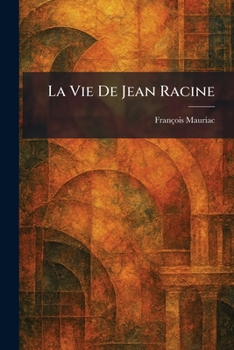
La Vie De Jean Racine

Select Format
Select Condition 
Book Overview
"La Vie De Jean Racine" is an evocative biographical exploration of the legendary 17th-century French playwright, written by the Nobel Prize-winning author Francois Mauriac. This work offers a deep psychological and spiritual portrait of Jean Racine, the master of French tragedy known for his unparalleled command of language and emotion. Mauriac traces Racine's development from his formative years under the influence of the austere Jansenists at Port-Royal to his triumphant career in the glittering court of King Louis XIV.
The biography focuses on the internal struggles that defined Racine's life, particularly the conflict between his worldly ambitions as a dramatist and his rigorous religious convictions. Mauriac, a master of the French novel, provides unique insights into the creative process and the moral dilemmas faced by the author of "Phedre" and "Andromaque." By examining Racine's complex relationships and his ultimate withdrawal from the stage, Mauriac illuminates the character of a man whose work continues to define the height of classical literature. This study is an indispensable resource for readers of French history, theater, and literary criticism, offering a timeless perspective on one of the most significant figures in the history of world drama.
This work has been selected by scholars as being culturally important, and is part of the knowledge base of civilization as we know it. This work was reproduced from the original artifact, and remains as true to the original work as possible. Therefore, you may see the original copyright references, library stamps (as most of these works have been housed in our most important libraries around the world), and other notations in the work.
This work is in the public domain in the United States of America, and possibly other nations. Within the United States, you may freely copy and distribute this work, as no entity (individual or corporate) has a copyright on the body of the work.
As a reproduction of a historical artifact, this work may contain missing or blurred pages, poor pictures, errant marks, etc. Scholars believe, and we concur, that this work is important enough to be preserved, reproduced, and made generally available to the public. We appreciate your support of the preservation process, and thank you for being an important part of keeping this knowledge alive and relevant.
Customer Reviews
ThriftBooks ® and the ThriftBooks ® logo are registered trademarks of Thrift Books Global, LLC
