


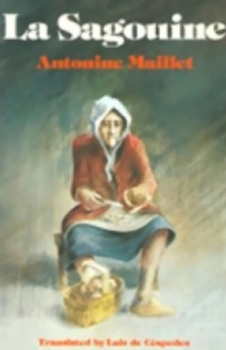
La Sagouine

Select Format
Select Condition 
Book Overview
The premise is deceptively simple: a dirt-poor charwoman and former prostitute leans on her mop and tells her life story. But what a story As she reminisces and rants, telling stories about herself,... This description may be from another edition of this product.
Format:Paperback
Language:English
ISBN:0889241856
ISBN13:9780889241855
Release Date:September 1979
Publisher:Dundurn Press
Length:183 Pages
Weight:0.55 lbs.
Dimensions:0.5" x 5.1" x 8.1"
Related Subjects
Classics Contemporary Drama Fiction Genre Fiction Historical Literary Literature & Fiction World LiteratureCustomer Reviews
1 rating
Life remembered from a rocking chair
Published by Thriftbooks.com User , 20 years ago
"La Sagouine" is a series of monologues written by Antonine Maillet in the Acadian French dialect today called Chiac (shee-ak). The main character, La Sagouine, a poor humble cleaning woman, recounts episodes of her life in her small village. While rocking back and forth on stage she reflects on many aspects of society, often pointing out class differences between rich and poor. Maillet uses La Sagouine's acceptance of her lot to stir outrage in the audience. For example, La Sagouine accepts as perfectly normal that at a public event like the parish Christmas fair, rich children get new toys while the poor get broken hand-me-downs. The opening sentence immediately defines the character: "J'ai p'têt la face nouére, mais j'ai les mains blanches", or in English "I maybe got a black face, but I got white hands". Her dirty face indicates her low caste while her white hands represent her menial status as a washer woman and also symbolize her engaging honesty. The original one-woman plays were created on stage by actress Viola Leger and were a staple of French Canadian television in the late 70s and early 80s. In writing a dialect, Ms. Maillet surpasses, in my mind, Margaret Mitchell's black dialects in "Gone With The Wind" or Emily Bronte's Yorkshire dialect in "Wuthering Heights". The book is short but, in the original French at least, it is long to read because we can't speed read if we want to savour the rich sounds of Chiac. Vincent Poirier, Tokyo
Copyright © 2026 Thriftbooks.com
Terms of Use | Privacy Policy | Do Not Sell/Share My Personal Information | Cookie Policy | Cookie Preferences | Accessibility Statement
ThriftBooks ® and the ThriftBooks ® logo are registered trademarks of Thrift Books Global, LLC
ThriftBooks ® and the ThriftBooks ® logo are registered trademarks of Thrift Books Global, LLC
