


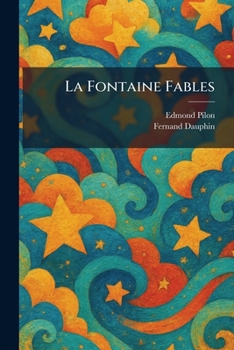
La Fontaine Fables

"La Fontaine Fables" is a foundational collection of poetic narratives that stand as a pillar of European literature. Jean de La Fontaine's masterful use of allegory and anthropomorphism brings to life a world where animals mirror the foibles, virtues, and vices of humanity. Through legendary tales such as the race between the tortoise and the hare or the encounter between the wolf and the lamb, these fables offer profound insights into power dynamics, ethics, and the human condition.
This edition, curated with the involvement of Edmond Pilon and Fernand Dauphin, preserves the rhythmic beauty and satirical wit that have made these stories immortal. Each fable concludes with a poignant moral, distilled from the observations of life in the 17th-century French court but universally applicable across all eras. "La Fontaine Fables" is more than a book of children's stories; it is a sophisticated literary work that challenges readers to reflect on social justice and personal integrity. Its blend of humor, drama, and philosophy ensures its place as a cherished classic for scholars and casual readers alike, celebrating the enduring power of the oral tradition transformed into high literary art.
This work has been selected by scholars as being culturally important, and is part of the knowledge base of civilization as we know it. This work was reproduced from the original artifact, and remains as true to the original work as possible. Therefore, you may see the original copyright references, library stamps (as most of these works have been housed in our most important libraries around the world), and other notations in the work.
This work is in the public domain in the United States of America, and possibly other nations. Within the United States, you may freely copy and distribute this work, as no entity (individual or corporate) has a copyright on the body of the work.
As a reproduction of a historical artifact, this work may contain missing or blurred pages, poor pictures, errant marks, etc. Scholars believe, and we concur, that this work is important enough to be preserved, reproduced, and made generally available to the public. We appreciate your support of the preservation process, and thank you for being an important part of keeping this knowledge alive and relevant.
Customer Reviews
ThriftBooks ® and the ThriftBooks ® logo are registered trademarks of Thrift Books Global, LLC
