


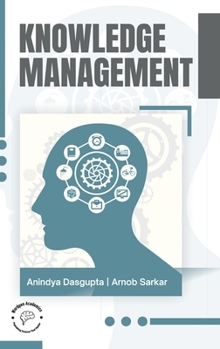
Knowledge Management
No Customer Reviews

Introduction to Knowledge Management (KM): Provide an overview of KM as a strategic process of capturing, sharing, and effectively using organizational knowledge to enhance decision-making and innovation. Types of Knowledge: Discuss explicit knowledge (documented and codified) and tacit knowledge (experiential and intuitive), and the importance of managing both within organizations. KM Processes: Explore core KM activities-knowledge creation, storage, retrieval, sharing, and application-that enable continuous learning and organizational growth. Technologies in KM: Highlight the role of digital tools such as knowledge bases, intranets, content management systems, and AI-driven platforms in facilitating knowledge access and collaboration. Organizational Culture and KM: Examine how leadership, communication, and a knowledge-sharing culture influence the success of KM initiatives. KM Models and Frameworks: Introduce popular models like SECI (Socialization, Externalization, Combination, Internalization) and Nonaka-Takeuchi's knowledge spiral as guides for KM implementation. Measurement and Evaluation: Discuss methods to assess the effectiveness of KM systems, including knowledge audits, performance metrics, and ROI analysis. Challenges and Trends: Address common KM challenges such as knowledge silos and employee resistance, and explore emerging trends like cloud-based KM, social learning, and knowledge analytics.
Format:Hardcover
Language:English
ISBN:9360848182
ISBN13:9789360848187
Release Date:January 2026
Publisher:Wordpen Academics
Length:202 Pages
Weight:1.02 lbs.
Dimensions:0.5" x 6.1" x 9.2"
Customer Reviews
0 rating
Copyright © 2026 Thriftbooks.com
Terms of Use | Privacy Policy | Do Not Sell/Share My Personal Information | Cookie Policy | Cookie Preferences | Accessibility Statement
ThriftBooks ® and the ThriftBooks ® logo are registered trademarks of Thrift Books Global, LLC
ThriftBooks ® and the ThriftBooks ® logo are registered trademarks of Thrift Books Global, LLC
