


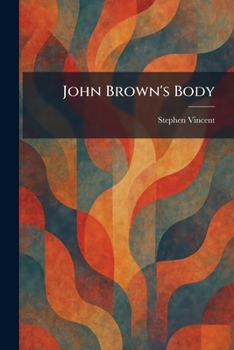
John Brown's Body

"John Brown's Body" is a monumental epic poem that captures the sweeping drama and profound tragedy of the American Civil War. Written by Stephen Vincent Ben t and awarded the Pulitzer Prize, this masterpiece blends historical fact with lyrical storytelling to chronicle the conflict from its inception at Harper's Ferry to its conclusion. Through a tapestry of diverse perspectives, the work explores the lives of both real historical figures-such as Abraham Lincoln and Robert E. Lee-and fictional characters caught in the crossfire of a nation divided.
Moving across the battlefields and through the homes of the North and South, the poem delves into the moral complexities of slavery, the fervor of the abolitionist movement, and the human cost of war. Ben t's rhythmic verse evokes the landscape and spirit of 19th-century America, creating an immersive experience that remains a cornerstone of American literature. "John Brown's Body" is not only a historical retelling but a vivid exploration of the American identity, sacrifice, and the relentless pursuit of freedom.
This work has been selected by scholars as being culturally important, and is part of the knowledge base of civilization as we know it. This work was reproduced from the original artifact, and remains as true to the original work as possible. Therefore, you may see the original copyright references, library stamps (as most of these works have been housed in our most important libraries around the world), and other notations in the work.
This work is in the public domain in the United States of America, and possibly other nations. Within the United States, you may freely copy and distribute this work, as no entity (individual or corporate) has a copyright on the body of the work.
As a reproduction of a historical artifact, this work may contain missing or blurred pages, poor pictures, errant marks, etc. Scholars believe, and we concur, that this work is important enough to be preserved, reproduced, and made generally available to the public. We appreciate your support of the preservation process, and thank you for being an important part of keeping this knowledge alive and relevant.
Customer Reviews
ThriftBooks ® and the ThriftBooks ® logo are registered trademarks of Thrift Books Global, LLC
