


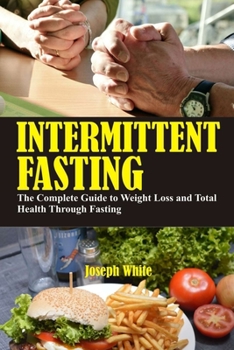
Intermittent Fasting: The Complete Guide to Weight Loss and Total Health Through Fasting

Intermittent fasting is an eating pattern where people limit their food consumption to certain hours of the day. Some research suggests that it may have benefits beyond weight loss, like improved brain and heart health.
Intermittent fasting (IF) is currently one of the world's most popular health and fitness trends. People are using it to lose weight, improve their health and simplify their lifestyles.
Many studies show that it can have powerful effects on your body and brain and may even help you live longer
Common intermittent fasting methods involve daily 16-hour fasts or fasting for 24 hours, twice per week.
Fasting has been a practice throughout human evolution. Ancient hunter-gatherers didn't have supermarkets, refrigerators or food available year-round. Sometimes they couldn't find anything to eat.
As a result, humans evolved to be able to function without food for extended periods of time. In fact, fasting from time to time is more natural than always eating 3-4 (or more) meals per day. Fasting is also often done for religious or spiritual reasons, including in Islam, Christianity, Judaism and Buddhism.
Discover more about intermittent fasting as you journey through this book.Customer Reviews
ThriftBooks® and the ThriftBooks® logo are registered trademarks of Thrift Books Global, LLC
