


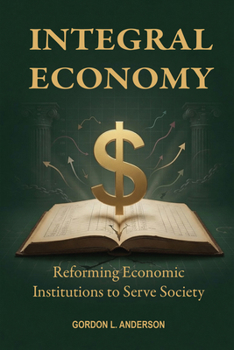
Integral Economy: Reforming Economic Institutions to Serve Society

Today, capital ownership remains centrally controlled. The Protestant Reformation of the economy is about a transformation that provides an opportunity for everyone to earn income from the ownership of capital. An integral economy distributes capital ownership widely by reforming banking, taxation, the patent system, and through capital income accounts provided to everyone at birth.
Economically responsible individuals are nourished by personal institutions on the right wing of society and an ethical economic playing field by impersonal ethical institutions on the left wing. Both wings serve the head, which contains the collective wisdom of society.
The book covers money, banking, binary economics, corporations, taxes, capital distribution, and an economic path upward for everyone. It is complete with appendices that contain five bills ready to make the U.S. Economy integral: (1) Decentralized Banking and Currency Stability Act; (2) Shareholder Dividend and Corporate Tax Reform Act; (3) Patent Reform and Public Access Act; (4) Youth Civil Service and Economic Autonomy Act; and (5) Capital Income Act.
Related Subjects
Business Business & Investing Philosophy Political Science Politics & Social SciencesCustomer Reviews
ThriftBooks ® and the ThriftBooks ® logo are registered trademarks of Thrift Books Global, LLC
