


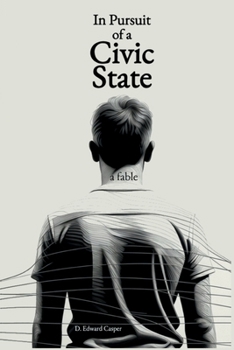
In Pursuit of a Civic State

Nobody is coming to save your town but the people who already live in it.
That's the whole premise, laid bare before the story even starts - because this isn't a book interested in surprising you with its argument. It's interested in showing you what that argument actually costs a person who decides to live by it.
In Pursuit of a Civic State follows one recently retired man through a single Wisconsin summer, as an ordinary errand turns into an education he never asked for - in zoning maps and records requests, in the quiet difference between a neighbor and someone merely wearing a neighbor's face, in how much of a town's future gets decided by people who were never elected to decide anything at all. It is not a story about winning. It is a story about what it costs to keep showing up once you've noticed something worth showing up for - and about the difference between a scandal, which ends, and a drift, which doesn't.
Structurally, it is something rarer than most fiction attempts anymore: a true fable, in the old sense - narrated by a voice that steps forward between each part to say plainly what the story itself is only willing to imply. Three legs of a stool. A pilot light, and the difference between that and a furnace. The uncomfortable arithmetic of who actually pays for a town's growth, and who merely benefits from it. By the closing pages, the fable sets its own metaphors aside entirely and speaks to the reader directly - an author's philosophy laid out in plain daylight, for anyone who finishes the story and wants more than a feeling to carry out of it.
This is not a comfortable book about civic life. It is an honest one. Whether that turns out to be the same thing, in your own town, is the only question it actually leaves you with.
Customer Reviews
ThriftBooks ® and the ThriftBooks ® logo are registered trademarks of Thrift Books Global, LLC
