


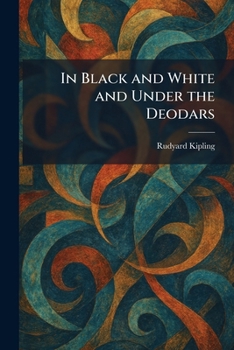
In Black and White and Under the Deodars

"In Black and White and Under the Deodars" is a compelling collection of short stories by the Nobel Prize-winning author Rudyard Kipling, offering a dual perspective on life in colonial India. This volume combines two distinct series of tales that showcase Kipling's mastery of the short form and his deep, albeit complex, relationship with the Indian subcontinent.
In the first section, "In Black and White," Kipling attempts to bridge the cultural divide by presenting stories from the viewpoint of the native inhabitants. These narratives explore local traditions, folklore, and the intricacies of daily life, providing a vivid glimpse into the diverse experiences of the Indian people during the late 19th century. In contrast, "Under the Deodars" shifts the focus to the social dynamics of the British ruling class. Set primarily in the hill station of Simla, these stories delve into the scandals, romances, and frustrations of the Anglo-Indian community, often employing a sharp, satirical wit.
Together, these works serve as a profound literary exploration of the tensions and intersections between two very different worlds. Characterized by Kipling's evocative prose and keen observational skills, this collection remains an essential read for those interested in classic literature and the historical complexities of the British Raj.
This work has been selected by scholars as being culturally important, and is part of the knowledge base of civilization as we know it. This work was reproduced from the original artifact, and remains as true to the original work as possible. Therefore, you may see the original copyright references, library stamps (as most of these works have been housed in our most important libraries around the world), and other notations in the work.
This work is in the public domain in the United States of America, and possibly other nations. Within the United States, you may freely copy and distribute this work, as no entity (individual or corporate) has a copyright on the body of the work.
As a reproduction of a historical artifact, this work may contain missing or blurred pages, poor pictures, errant marks, etc. Scholars believe, and we concur, that this work is important enough to be preserved, reproduced, and made generally available to the public. We appreciate your support of the preservation process, and thank you for being an important part of keeping this knowledge alive and relevant.
Customer Reviews
ThriftBooks ® and the ThriftBooks ® logo are registered trademarks of Thrift Books Global, LLC
