
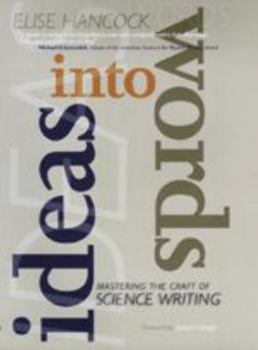
I am so proud to be Elise's student. Read this book and I suspect you will be too.--from the foreword by Robert Kanigel, author of The Man Who Knew InfinityFrom the latest breakthroughs in medical... This description may be from another edition of this product.
This book is certainly worth reading for people interested in Science Writing. I am actually a Psychologist thinking about dabbling in science writing for a wider audience and this book served to fuel my interest and offered a number of condensed tips. Its written in a quick to read writing style that I find enjoyable, broken in to small sections about different points which allowas you to be rewarded and move on or pick it up later to read some more. Todd Finnerty, Psy.D.
Joy of Writing
Published by Thriftbooks.com User , 20 years ago
Elise Hancock's lucid style will seduce scientists to write with candor and renewed passion. Solid professional advice in this 151-page self-help guide. Encourage a copy to your bored lab colleague and inspire them to trade their pipette for pen!
important for science writers; easy and fun to read
Published by Thriftbooks.com User , 22 years ago
The author provides many examples of great scientific writing. Such writing involves translating difficult-to-understand abstractions into concepts easy to understand and related to our current knowledge.Her writing was a delight to read."As the article proceeds, it is as if the selected facts are coated in honey, so that they slide down easy, one pill at a time. No reader will go away thinking, Boy was that turgid, I had to learn a new word just about every paragraph - even though she did."The book is organized into the following chapters: 1 A Matter of Attitude2 Finding Stories3 Finding Out: Research and the Interview4 Writing: Getting Started adn theSTructure5 Writing: The Nitty Gritty6 Refining Your Draft7 When You're Feeling StuckWhat I particularly liked:+ her ability to use extended similes, metaphors+ things that make scientific writing different+ watch out for scientific mavericks+ how to find scientific story ideas (excellent)+ don't confuse a topic with a story idea+ all of her material on interviewing (excellent, particularly the questions to ask)+ focusing on the most likely reader, but also the other ones+ her method of writing was unique (lack of exploratory free-writing, don't spill the beans on your story before you write)+ her recommended use of organic shapes for your writing (excellent)+ "build the picture before you supply the name" (how to define technical terms)+ some great tips on putting on a fresh set of eyes before you start to revise and then edit.+ re-organizing the paragraphs using their "gists"+ "... in a term paper you tell. In a professional writing, you show."I highly recommend this book for anyone who writes, but particularly for anyone who wants to write for the scientific or technical markets.John Dunbar
Useful for aspiring science writers and scientists alike
Published by Thriftbooks.com User , 22 years ago
I read "Ideas into Words" primarily for an insight into how science writers go about their business and secondarily to see if aspects of good popular science writing can be useful in communicating science between disciplines - and in writing grant applications. Hancock does indeed provide a nice glimpse into scientific journalism. The second and third chapters focused on reporting science and interacting with scientists from a journalist's perspective. A lot of the suggestions also apply to what makes for a good science student. The final four chapters dealt with writing and some of the suggestions do cross over from journalism to other forms of writing. The first chapter was the most enjoyable; the discussions of what science is and how scientists think were gems. My favorites sections were on the mentoring process in science and the difference between scientific and legal forms of rational inquiry - truth vs. verdict.I recommend this book mainly to people interested in becoming science writers. I believe the suggestions would help anyone reporting on my own work, for example. The suggestions and discussions in the book are also of value to scientists who wish to communicate their work.
ThriftBooks sells millions of used books at the lowest
everyday prices. We personally assess every book's quality and offer rare, out-of-print treasures. We
deliver the joy of reading in recyclable packaging with free standard shipping on US orders over $15.
ThriftBooks.com. Read more. Spend less.

