


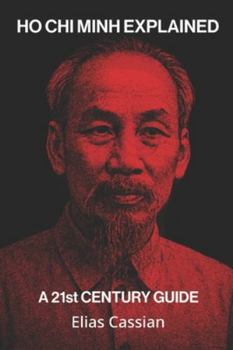
Ho Chi Minh Explained: A 21st Century Guide

Who was Ho Chi Minh? Hero or dictator? Anti-colonial liberator or communist oppressor? The beloved "Uncle Ho" on every Vietnamese banknote, or the architect of campaigns that killed thousands? The leader who defeated France and America, or the founder of an authoritarian state that drove hundreds of thousands to flee as refugees?
The answer is all of the above. Ho Chi Minh was one of the twentieth century's most significant and contradictory figures-and understanding him requires moving beyond simple judgments to grapple with genuine complexity.
A Balanced, Complete Portrait
Ho Chi Minh Explained presents the full arc of his extraordinary life: from childhood in colonial Vietnam through decades as a wandering revolutionary in Paris, Moscow, and Canton, to leadership of the wars that would define modern Vietnam. Written for intelligent readers with no prior background, this book examines both his strategic brilliance and his moral failures, his genuine achievements and his serious crimes.
You'll understand how he developed revolutionary nationalism-combining Vietnamese independence with communist transformation. You'll see how he mobilized peasants in a rural society, adapted guerrilla warfare to defeat militarily superior enemies, and sustained struggle across decades through patient strategy. You'll follow the dramatic August 1945 revolution, the nine-year war against France ending at Dien Bien Phu, and the even longer war against America.
Confronting the Difficult Questions
Unlike romanticized accounts, this book doesn't shy away from darkness. You'll learn about land reform campaigns that killed tens of thousands in the 1950s. The re-education camps imprisoning hundreds of thousands after 1975. The refugee crisis that drove Vietnamese to risk death at sea rather than live under the system he created. The economic failures that produced decades of poverty until socialist policies were abandoned.
The book asks hard questions: What responsibility did Ho Chi Minh bear for violence committed under his leadership? Could independence have been achieved with lower costs? Why did liberation produce authoritarianism? How should we judge leaders who achieve real goods through terrible means?
Context and Comparison
To help you understand Ho Chi Minh properly, the book compares him to Stalin, Mao, Lenin, and Castro-showing he was less brutal than some revolutionary leaders but still built repressive systems. It examines what his struggle reveals about contemporary questions: self-determination in a globalized world, when intervention is justified, what resistance movements can learn from Vietnamese strategy, and whether revolutionary transformation can avoid replicating the oppression it fights against.
What You'll Gain
This book gives you tools to think clearly about Ho Chi Minh rather than telling you what to think. It presents the strongest case for his achievements and the strongest criticisms of his failures. You'll understand why Vietnamese honor him, why refugees despise him, and why scholars debate his significance.
By the end, you'll grasp how revolutionary movements work and what they cost. You'll understand relationships between nationalism and communism, liberation and oppression, idealism and authoritarianism. You'll have frameworks for assessing complex historical figures and for thinking about enduring questions of power, justice, and violence. Whether you're encountering Vietnamese history for the first time or deepening existing knowledge, this book provides comprehensive, balanced understanding. No prior knowledge required-just willingness to engage with complexity rather than accept simple narratives.
Ho Chi Minh Explained is history that illuminates the present: an honest examination of a life that shaped the modern world and continues to raise questions we're still wrestling with today.
Customer Reviews
ThriftBooks ® and the ThriftBooks ® logo are registered trademarks of Thrift Books Global, LLC
