


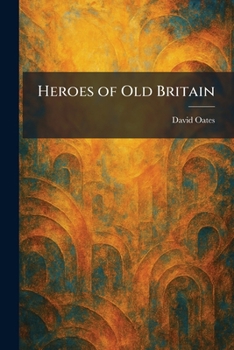
Heroes of Old Britain

"Heroes of Old Britain" is a compelling collection of legendary tales and historical narratives that chronicle the lives of the most significant figures from early British history and folklore. Written by David Oates, this work brings to life the vibrant traditions of the British Isles, weaving together stories of mythic proportions and historical significance. From the defiant stand of Caractacus against the Roman legions to the enduring legends of King Arthur and his knights, the book explores the virtues of bravery, sacrifice, and honor that form the bedrock of national identity.
The narrative spans several centuries, touching upon the lives of notable leaders such as Alfred the Great and Hereward the Wake. Oates presents these "Heroes of Old Britain" not merely as distant figures of the past, but as living symbols of the British spirit. The prose captures the atmosphere of ancient landscapes and the drama of pivotal battles, making it an engaging read for those fascinated by the intersection of history and mythology. This volume remains a valuable resource for understanding how early Britain viewed its own origins and the heroic ideals that have inspired generations. It is a masterful synthesis of tradition and storytelling that preserves the rich cultural heritage of the United Kingdom.
This work has been selected by scholars as being culturally important, and is part of the knowledge base of civilization as we know it. This work was reproduced from the original artifact, and remains as true to the original work as possible. Therefore, you may see the original copyright references, library stamps (as most of these works have been housed in our most important libraries around the world), and other notations in the work.
This work is in the public domain in the United States of America, and possibly other nations. Within the United States, you may freely copy and distribute this work, as no entity (individual or corporate) has a copyright on the body of the work.
As a reproduction of a historical artifact, this work may contain missing or blurred pages, poor pictures, errant marks, etc. Scholars believe, and we concur, that this work is important enough to be preserved, reproduced, and made generally available to the public. We appreciate your support of the preservation process, and thank you for being an important part of keeping this knowledge alive and relevant.
Related Subjects
HistoryCustomer Reviews
ThriftBooks ® and the ThriftBooks ® logo are registered trademarks of Thrift Books Global, LLC
