


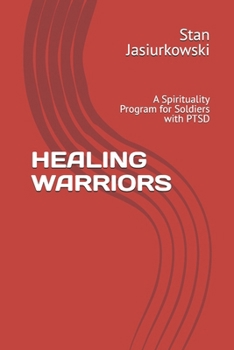
Healing Warriors: A Spirituality Program for Soldiers with PTSD

Every year, hundreds of thousands of combat veterans return home carrying wounds that no discharge paper names and no medication fully heals. They have been diagnosed, medicated, and processed through evidence-based psychotherapies. Some improve. Many do not - not because the clinical care failed, but because it addressed only part of the wound. The rest - the guilt that will not yield to cognitive restructuring, the rage at God that lies beneath the rage at the chain of command, the collapse of meaning that persists long after the nightmares have quieted - belongs to a different discipline. It belongs to the chaplain.
HEALING WARRIORS is the product of sixteen years of research, ministry, and field-tested pastoral practice by a combat veteran, retired military chaplain, and survivor of PTSD himself. Beginning with research during deployment to Iraq in 2007-2008, continued through Clinical Pastoral Education residency in an Intensive Outpatient Psychiatric program, and refined across years of service in Warrior Transition Units and inpatient psychiatric care at Womack Army Medical Center, Fort Bragg, this book offers military chaplains, pastoral caregivers, and clinicians a rigorously grounded, practically deployable response to the wounds that behavioral health alone cannot reach.
At the heart of the book is a five-session spiritual care program built around spirituality as connection - with the Creator, with conscience, with community, and with creation - the four connections that combat trauma most consistently ruptures. Each is addressed through facilitated group sessions culminating in a healing ritual of confession, anointing, and blessing drawn from the Church's ancient ministry to the sick and wounded.
Two pastoral vignettes give the book its emotional center. The first follows a soldier whose clinical treatment missed the actual wound entirely: moral guilt for civilians killed in a combat ambush, a wound that responded not to exposure therapy but to sacramental confession and absolution. The second follows a soldier who declared himself an atheist in his first therapy session - whose fury at God turned out to be decades-old rage at an abusive pastor-father. Two weekends after a single pastoral conversation, he was back in church with his wife.
These stories embody the book's central argument: that moral injury is not a subtype of PTSD but a distinct spiritual wound requiring confession, forgiveness, and pastoral accompaniment. No medication reduces guilt. No exposure protocol absolves a sin. The resources the morally injured veteran most needs are the ones the Christian tradition has been developing for two thousand years.
The book engages the full clinical landscape with unusual depth - neurobiological research, evidence-based psychotherapies, and the latest pharmacological developments including MDMA-assisted therapy and stellate ganglion block - because chaplains who cannot speak the language of their clinical colleagues cannot fully serve the soldiers they share.
Written with the authority of lived experience, the rigor of serious scholarship, and the warmth of a pastor who has stood on both sides of the wound, HEALING WARRIORS offers both a theological language for what the standard treatment picture is missing, and a practical, field-tested program for addressing it.
Customer Reviews
ThriftBooks ® and the ThriftBooks ® logo are registered trademarks of Thrift Books Global, LLC
