


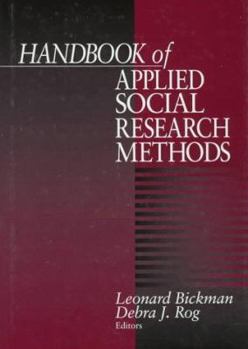
Handbook of Applied Social Research Methods

Did you know that:
- The triangulation of methods and measures can enhance validity and compensate for the fallibility of any single method or measure in applied research?
- All aspects of research are interdependent and that any weakness in one area will affect the quality of the data collected?
- Both qualitative and quantitative tools may be needed to research a topic thoroughly and provide results that can be used?
Applied researchers are often given multiple questions to answer from real-world settings and so must often use multiple research methods. How do you decide which techniques best fit the research question, context, and resources at hand? The Handbook of Applied Social Research Methods provides a complete resource to guide your decisions for all your applied research questions. The book′s emphasis is on finding the tools that best fit the research question given the constraints of deadlines, budget, and available staff. It shows you how to make intelligent and conscious tradeoffs so that you can refine and hone the research question as new knowledge is gained, unanticipated obstacles are encountered, or contextual shifts take place - all key elements in the iterative nature of applied research. With examples and illustrations from the authors′ own experiences, this book gives readers a practical guide to conducting applied research that is sensitive to the constraints and opportunities in program and policy environments yet can deliver rigorous and useful research information.
Related Subjects
Politics & Social Sciences Psychology Research Science & Math Social Science Social SciencesCustomer Reviews
ThriftBooks ® and the ThriftBooks ® logo are registered trademarks of Thrift Books Global, LLC
