


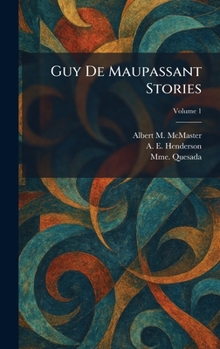
Guy De Maupassant Stories

"Guy De Maupassant Stories" serves as a masterful introduction to the work of one of the most influential figures in world literature. As a cornerstone of nineteenth-century French realism, Guy de Maupassant revolutionized the short story form, bringing a sharp, unsentimental eye to the complexities of human behavior and the rigid social structures of his time. This volume presents a selection of his prose, characterized by its economical style, psychological depth, and often biting irony.
The narratives within this collection range from poignant sketches of Parisian society to gritty portrayals of rural life and the haunting echoes of the Franco-Prussian War. Maupassant's characters-whether they are aristocrats, bureaucrats, or peasants-are rendered with startling clarity and empathy, revealing the universal desires and tragedies that define the human condition. From tales of tragic irony to subtle explorations of the supernatural, the work showcases the breadth of a writer who could find profound meaning in the most mundane circumstances. This collection is an essential volume for readers of classic literature and those seeking to experience the craft of a writer who perfected the art of the short narrative.
This work has been selected by scholars as being culturally important, and is part of the knowledge base of civilization as we know it. This work was reproduced from the original artifact, and remains as true to the original work as possible. Therefore, you may see the original copyright references, library stamps (as most of these works have been housed in our most important libraries around the world), and other notations in the work.
This work is in the public domain in the United States of America, and possibly other nations. Within the United States, you may freely copy and distribute this work, as no entity (individual or corporate) has a copyright on the body of the work.
As a reproduction of a historical artifact, this work may contain missing or blurred pages, poor pictures, errant marks, etc. Scholars believe, and we concur, that this work is important enough to be preserved, reproduced, and made generally available to the public. We appreciate your support of the preservation process, and thank you for being an important part of keeping this knowledge alive and relevant.
Customer Reviews
ThriftBooks ® and the ThriftBooks ® logo are registered trademarks of Thrift Books Global, LLC
