


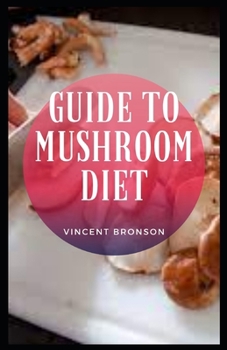
Guide to Mushroom Diet: Mushrooms are mainly found in forests and areas with a lot of moisture
No Customer Reviews

Mushrooms are mainly found in forests and areas with a lot of moisture. They are classified as a saprophage (a fancy word of Greek origin, meaning "eats rotting stuff"), and therefore don't have chlorophyll, so they don't require sunlight to grow. Saprophages tend to grow in peat, on logs or trees, and in soil, and thrive in moist environments by extracting nutrients from dead and decaying plant and animal matter.Although mushrooms are often lumped together with vegetables and other plants, technically, they aren't plants at all. Mushrooms are fungi - as are yeasts and molds. Fungi get their own kingdom, just like plants and animals.There are two big differences between the two kingdoms. Plants make their own food via photosynthesis, while fungi take in their food from the outside, just as animals do. Also, plant cell walls are made up of cellulose, as opposed to the chitin that makes up the cell walls of fungi (and interestingly, the exoskeletons of insects and the scales of fish). So next time you include mushrooms in a veggie stir-fry, take time to appreciate the fact that members of such different biological kingdoms get along so well together.What we call a mushroom is technically the fruiting body of a type of fungus. It's made up of three parts: the stipe (stem), the pileus (cap), and the lamellae (gills). The "seeds" of the mushroom "fruit" are its spores, which form a network of microscopic rooting threads called mycelium. This is a mass of thread-like branches that the mushrooms use to decompose nearby plant material in order to extract nutrients. Mycelium can live for many years, communicating with other plants and sending up its annual crop of mushrooms.
Format:Paperback
Language:English
ISBN:B0915DH7TP
ISBN13:9798728312888
Release Date:January 1
Publisher:Independently Published
Length:146 Pages
Weight:0.39 lbs.
Dimensions:0.3" x 5.5" x 8.5"
Customer Reviews
0 rating
Copyright © 2026 Thriftbooks.com Terms of Use
| Privacy Policy | Do Not
Sell/Share My Personal Information | Cookie Policy | Cookie Preferences | Accessibility Statement
ThriftBooks® and the ThriftBooks® logo are registered trademarks of Thrift Books Global, LLC
ThriftBooks® and the ThriftBooks® logo are registered trademarks of Thrift Books Global, LLC
