


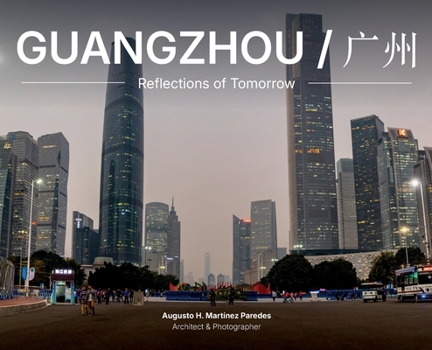
Guangzhou: Reflections of Tomorrow

A city understood through its architecture. A changing skyline rooted in cultural memory.
Guangzhou is often encountered through the towers that rise along the Pearl River. Yet its character also emerges in shaded courtyards, carved timber halls, waterfront gardens, and the everyday movement of people through its streets.
In Guangzhou: Reflections of Tomorrow, architect and photographer Augusto H. Mart nez Paredes brings these different scales into conversation. His photographs explore how buildings frame human experience: how a threshold marks a transition, how a roof gathers light, and how water connects architecture with its surroundings.
From inherited traditions to contemporary horizons
The photographic journey begins with the courtyards and craftsmanship of the Chen Clan Ancestral Hall, where timber, tile, and ornament express the relationship between construction and cultural memory. Gardens and pavilions reveal the spatial traditions of Lingnan, while the streets of Shamian Island offer another chapter in the city's architectural history.
Along the Pearl River, the scale changes. Towers, civic buildings, and public spaces articulate Guangzhou's contemporary ambitions. The faceted surfaces of the Guangzhou Opera House, the presence of Canton Tower, and the expansive roof of Guangzhou South Railway Station invite close attention to structure, material, and the movement of light.
Between these landmarks, quieter scenes remain essential: a shaded path, a courtyard opening, a reflection on water, or the daily activity beneath a monumental roof. Together, they present a city whose identity is continually shaped through use.
What readers will discover
- Architecture across different scales: from carved details and domestic streets to large public interiors and the metropolitan skyline.
- A dialogue between past and present: photographs that place traditional craft, colonial-era streetscapes, and contemporary design within a shared urban narrative.
- The relationship between buildings and people: spaces of passage, gathering, contemplation, and everyday life.
- Light, water, and material: visual studies of how reflections, shadows, textures, and structural rhythms shape the perception of architecture.
- An architect's reading of place: concise commentary that connects the photographs with questions of cultural memory, spatial experience, and urban transformation.
Photographs that invite a closer look
The book combines broad views with studies of detail, encouraging readers to move between the scale of the city and the intimacy of its spaces. English texts, accompanied by Chinese titles and selected passages, provide context while preserving the central role of the photographs.
For readers interested in architectural photography, design, Chinese urban culture, and the experience of place, this collection offers a sustained visual encounter with Guangzhou. It can be explored as a photographic journey or revisited for its observations of form, craft, and everyday inhabitation.
Volume III of the China Series
With photography, texts, and editorial design by Augusto H. Mart nez Paredes, Guangzhou: Reflections of Tomorrow follows the city from its inherited spaces to its emerging horizons.
Look beyond the skyline. Discover the spaces that give Guangzhou its character.
Customer Reviews
ThriftBooks ® and the ThriftBooks ® logo are registered trademarks of Thrift Books Global, LLC
