


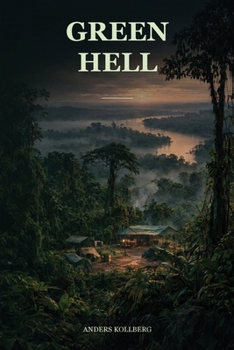
Green Hell

Deep in the Amazon, two hundred kilometres up the Rio Negro, Camp Avenir clings to a clearing carved out of the world's densest forest. Here a small team of scientists studies insects that could change medicine -- or end a life. When a prominent researcher is found dead of an apparent sting from a species believed long extinct in the region, the camp manager's evasive answers pull Inspector Raul Silva out of his Manaus office and into the green hell. Silva arrives by helicopter to a locked room, a vanished killer, and a group of brilliant people with everything to hide. The dead man's colleagues guard their work jealously, and the rivalry with a scientist back in the city runs far deeper than funding disputes. The deeper Silva digs, the more he finds: sabotage, a stolen specimen, a trail of secrets that leads from the research station to the lecture halls of the institute. But the rainforest keeps its own counsel. The heat, the isolation, and the relentless chorus of life wear down every certainty. As Silva closes in on a truth as small and deadly as the insect at the heart of the case, he must decide how much of himself he is willing to lose to the jungle -- and what justice means in a place that has no memory of it. The Amazon breathed. It was a living, heaving entity, a vast green ocean that stretched beyond the horizon, swallowing mountains, rivers, and sky. This was the lungs of the planet, the engine of rainfall, the repository of more life than anywhere else on Earth. For millennia, it had thrived in splendid isolation, its rhythms dictated by the turn of seasons, the rise and fall of rivers, the silent warfare between predator and prey. Then humans came, with their axes and their fires, their roads and their greed. Yet the forest endured, adapting, fighting back with a quiet, relentless tenacity. Humidity hung in the air like a wet blanket, thick enough to drink.
Customer Reviews
ThriftBooks ® and the ThriftBooks ® logo are registered trademarks of Thrift Books Global, LLC
