


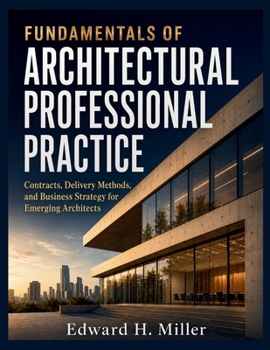
Fundamentals of Architectural Professional Practice: Contracts, Delivery Methods, and Business Strategy for Emerging Architects

A five-year design education teaches you to defend a concept in front of a jury of critics. It rarely teaches you what a certificate for payment actually authorizes, why a single limitation-of-liability clause can outweigh the paragraph it sits in, or how a firm decides that a client relationship has become a liability rather than an asset.
That gap between design fluency and practice fluency is a structural blind spot in how architects are trained, not a personal failing. Studio teaches you to see, to conceptualize, and to defend a design decision. It rarely teaches the legal, contractual, and financial competence that determines whether that design ever reaches the street, and most curricula touch professional practice only briefly, if at all.
This textbook exists to close that gap. Written for architecture students approaching graduation, early-career professionals logging the supervised experience hours required for licensure, and newly licensed architects navigating their first years of responsible practice, it treats the legal, ethical, financial, and organizational side of practice with the same depth and structure architecture programs bring to studio and building technology across eighteen fully developed chapters. It does not re-teach design theory, building science, or code-minimum planning; it assumes that fluency and builds the practice-side literacy design education leaves out.
This book will help you:
● Understand the legal definition of practicing architecture, state licensing board authority, and the duty of care that defines professional standard of practice
● Read, interpret, and negotiate standard-form design and consultant contracts without weakening the protections they were written to provide
● Distinguish among the major project delivery structures and recognize how each one reassigns risk, sequencing, and responsibility
● Estimate fees against scope and risk, and administer construction with confidence, from submittals and requests for information to certificates for payment and closeout
● Manage professional risk proactively, including sources of liability, insurance fundamentals, and indemnification and limitation-of-liability clauses
● Build firm-wide quality assurance systems, and read financial statements well enough to understand profitability and overhead
● Navigate business development, firm leadership, and succession planning as a working part of professional competence
The book moves from the legal and ethical foundation of the profession through firm structures, licensure, and the owner-architect relationship; into contracts, delivery methods, scope, and consultant coordination; through code research, design-process management, and construction administration; and finally into risk management, disputes, quality assurance, firm finance, business development, and leadership. A glossary and a list of symbols and acronyms support readers working through unfamiliar terminology for the first time.
This book is written for architecture students, licensure candidates, early-career licensed architects, project managers newly responsible for contract administration, firm principals mentoring junior staff, and continuing-education instructors.
Begin building the practice-side literacy that turns good design into buildings that actually get delivered, on the terms you intended.
Customer Reviews
ThriftBooks ® and the ThriftBooks ® logo are registered trademarks of Thrift Books Global, LLC
