



Select Format
Select Condition 
Book Overview
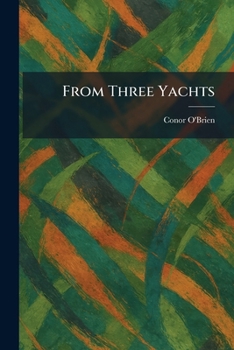
"From Three Yachts" is a captivating maritime memoir and travelogue by the renowned Irish yachtsman Conor O'Brien. Chronicling his adventures across the high seas, the work details O'Brien's experiences commanding three distinct vessels, including the legendary "Saoirse." This narrative offers a unique perspective on the art of navigation and the realities of life at sea during the early 20th century.
Throughout the book, O'Brien provides insightful observations on boat design, seamanship, and the various ports of call encountered during his voyages. As one of the first amateur sailors to successfully circumnavigate the globe via the Great Capes, O'Brien's prose reflects a deep practical knowledge of the ocean and a poetic appreciation for its vastness. "From Three Yachts" stands as a significant contribution to nautical literature, appealing to sailors, historians, and enthusiasts of maritime exploration alike. The work captures the spirit of adventure and the technical mastery required to traverse the world's most challenging waters in small craft.
This work has been selected by scholars as being culturally important, and is part of the knowledge base of civilization as we know it. This work was reproduced from the original artifact, and remains as true to the original work as possible. Therefore, you may see the original copyright references, library stamps (as most of these works have been housed in our most important libraries around the world), and other notations in the work.
This work is in the public domain in the United States of America, and possibly other nations. Within the United States, you may freely copy and distribute this work, as no entity (individual or corporate) has a copyright on the body of the work.
As a reproduction of a historical artifact, this work may contain missing or blurred pages, poor pictures, errant marks, etc. Scholars believe, and we concur, that this work is important enough to be preserved, reproduced, and made generally available to the public. We appreciate your support of the preservation process, and thank you for being an important part of keeping this knowledge alive and relevant.
Customer Reviews
ThriftBooks ® and the ThriftBooks ® logo are registered trademarks of Thrift Books Global, LLC
