


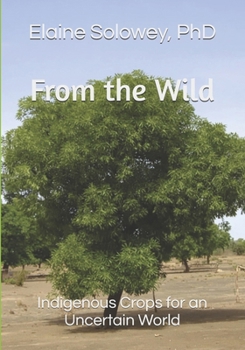
From the Wild: Indigenous Crops for an Uncertain World
No Customer Reviews

Indigenous fruit and nut trees are an undervalued resource, ignored and
neglected for many years by the scientific and economic powers but often a
mainstay and a lifesaver for those with no money. The African child who goes out with an empty belly to tend the herd finds his
breakfast in the bush. The old woman in Appalachia "getting by" on a meager
pension in the land of plenty turns the wild berries of the forest slopes into
preserves for the pantry and sells a few jars to passing tourists. The laborer
who earns only enough to buy dull staple foods finds needed vitamins in the
leaves and fruit of plants that hold no interest to the well fed. The fact that these plants are used and needed by some of the world's
poorest people is enough reason to study, promote and preserve IFT, but
there are other pressing reasons. The development of IFT resources could
have global impact. Recognition and study of the value of IFT products could
guarantee that a certain percentage of land would be kept in forest or
woodland. There would be an economic rationale for the preservation of rare
and endangered IFT species. Many cultivated trees have lost much of their genetic diversity and with it
disease resistance, tolerances and vigor. Wild relatives of these crops may
provide transferable traits for the renewal of weary conventional cultivars.
IFT trees are often key species in the attempts to restore lost forests or
woodlands. New crops or cropping systems built on IFT may create employment,
reclaim marginal land, provide a base for small scale and cottage industry
and increase the food supply where it is most needed: in impoverished rural
areas.
neglected for many years by the scientific and economic powers but often a
mainstay and a lifesaver for those with no money. The African child who goes out with an empty belly to tend the herd finds his
breakfast in the bush. The old woman in Appalachia "getting by" on a meager
pension in the land of plenty turns the wild berries of the forest slopes into
preserves for the pantry and sells a few jars to passing tourists. The laborer
who earns only enough to buy dull staple foods finds needed vitamins in the
leaves and fruit of plants that hold no interest to the well fed. The fact that these plants are used and needed by some of the world's
poorest people is enough reason to study, promote and preserve IFT, but
there are other pressing reasons. The development of IFT resources could
have global impact. Recognition and study of the value of IFT products could
guarantee that a certain percentage of land would be kept in forest or
woodland. There would be an economic rationale for the preservation of rare
and endangered IFT species. Many cultivated trees have lost much of their genetic diversity and with it
disease resistance, tolerances and vigor. Wild relatives of these crops may
provide transferable traits for the renewal of weary conventional cultivars.
IFT trees are often key species in the attempts to restore lost forests or
woodlands. New crops or cropping systems built on IFT may create employment,
reclaim marginal land, provide a base for small scale and cottage industry
and increase the food supply where it is most needed: in impoverished rural
areas.
Format:Paperback
Language:English
ISBN:B0H6XXN2WC
ISBN13:9798183814439
Release Date:July 2026
Publisher:Independently Published
Length:216 Pages
Weight:1.16 lbs.
Dimensions:0.6" x 7.0" x 10.0"
Customer Reviews
0 rating
Copyright © 2026 Thriftbooks.com
Terms of Use | Privacy Policy | Do Not Sell/Share My Personal Information | Cookie Policy | Cookie Preferences | Accessibility Statement
ThriftBooks ® and the ThriftBooks ® logo are registered trademarks of Thrift Books Global, LLC
ThriftBooks ® and the ThriftBooks ® logo are registered trademarks of Thrift Books Global, LLC
