


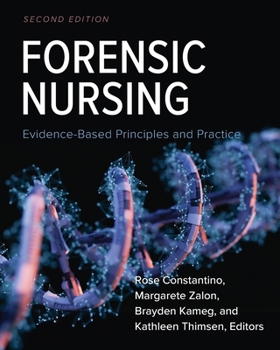
Forensic Nursing : Evidence-Based Principles and Practice

Kathleen Thimsen, DNP, WOCN/CETN, FNS, DF-AFN, AFN-BC, is an Associate Professor-in-Residence at the University of Nevada Las Vegas. She maintains a consulting practice in forensics aimed explicitly at elder abuse, neglect, and homicide investigations nationally. She is a co-founder of the Academy of Forensic Nursing and the Forensic Nursing Certification Board and founder and president of Firearm Harm Reduction Nevada (FAIR-NV).
Rose Constantino, Ph.D., JD, RN, FAAN, FACFE, is an Associate Professor in the Department of Health and Community Systems in the School of Nursing at the University of Pittsburgh. She teaches forensic nursing and practices family law and psychiatric mental health nursing. Her research focuses on resilience and resilience-informed care to enhance health, equity, and capacity-building in communities.
Margarete L. Zalon, Ph.D., RN, ACNS-BC, FAAN, is a Professor Emerita in the Department of Nursing and continues to teach health informatics at the University of Scranton. She is an adult health clinical nurse specialist and has published widely on policy and professional issues. Her research focus is on the elderly, pain management, and delirium.
Brayden Kameg, Ph.D., DNP, PMHNP-BC, CARN-AP, CNE, FIANN, is an Assistant Professor in the Department of Health and Community Systems in the School of Nursing at the University of Pittsburgh, where she coordinates the psychiatric-mental health nurse practitioner program.
Featuring contributed chapters written by experts, Forensic Nursing: Evidence-Based Principles and Practice provides readers with a complete roadmap to forensic nursing, exploring both healthcare and criminal justice systems. By integrating forensic science with biopsychosocial knowledge and clinical nursing skills, the book provides a foundation for practicing nurses engaged in scientific investigation, evidence collection, and examination.
More than just a theoretical resource, the book serves as a practical guide to evidence-based practice in forensic nursing. It covers a wide array of topics, including evidence collection, child maltreatment, intimate partner violence, and sexual assault, and builds competencies in deductive analysis, critical thinking, and communication. With exercises like case studies and questions that support real-life applications, it also serves as a guide to evidence-based practice in forensic nursing, underscored by current research and multidisciplinary insights.
Featuring vital updates on global topics such as disaster management, trauma-informed care, human rights violations, injury identification, human trafficking, and strangulation, the second edition continues to provide critical, evidence-based information that aligns with the competencies required for modern forensic nursing programs, certificates, and courses.
Customer Reviews
ThriftBooks ® and the ThriftBooks ® logo are registered trademarks of Thrift Books Global, LLC
