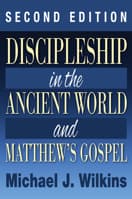
In the aftermath of the waves of discipleship programs that have swept over the church in the last 30 years, clergy, and laypersons alike are more confused than ever about what it means to be a disciple of Jesus Christ. What should a disciple of Jesus look and act like today? What is the relationship between discipleship and salvation, between discipleship and sanctification, between discipleship and ministry? How were disciples of Jesus different from other disciples in the ancient world? How did the early church carry out Jesus' agenda in "making disciples of all the nations"? In Following the Master, Michael J. Wilkins addresses these and many other questions that perplex the church today- not by offering another discipleship program or manual but by presenting a comprehensive biblical theology of discipleship. Following the Master compares other forms of master-disciple relationships in existence in the ancient Judaism and Greco-Roman world, traces Jesus' steps as he called and developed disciples, and Mediterranean world as it followed Jesus' command to make disciples. Following the Master lays the groundwork necessary for developing biblical discipleship ministries in the church, on the mission field, and in parachurch ministries. It is essential reading for all pastors, students, and Christian workers.
As others wrote, this book could have been a little shorter. However, his overview of biblical discipleship is excellent. I think the great strength of this book is the emphasis on defining discipleship as involving both cost and commitment. Every follower of Christ is a disciple. I'm not sure if that makes him a "lordship salvation" guy or not, but I think that he takes a biblical approach.
0
★★★★☆
Good purchase
By Thriftbooks.com User, September 24, 2009
The book was in good condition. I've found a word written in the margin of one page, but other than that, it is great.
0
★★★★☆
In the right direction...
By Thriftbooks.com User, September 30, 2008
As another reviewer mentioned, this book is solid exegetically but it contains redundant information and is essentially too large as is. That said, his analysis of extant discipleship models relative to a careful biblical theological exposition of the nuances of discipleship (e.g. faithfulness to the individual Gospels narrative and theological grid) is worth the price. The first 7 chapters alone make it a solid discipleship tool, and chapters 17-18 rounds out the book.