


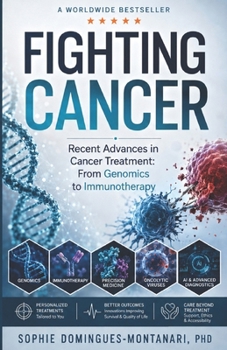
Fighting Cancer: Recent Advances in Cancer Treatment: From Genomics to Immunotherapy

Cancer treatment is changing faster than ever. But what actually works, what is still experimental, and what do the latest breakthroughs really mean for patients?
FIGHTING CANCER is a clear, evidence-based guide to the extraordinary transformation taking place in modern oncology-from genomics and targeted therapies to immunotherapy, CAR-T cells, liquid biopsies, cancer vaccines, radioligand therapy, and artificial intelligence.
Written for patients, families, caregivers, students, and curious readers-not just physicians, this book explains complex cancer science in language that is understandable without oversimplifying it.
Rather than promising a single "cure for cancer," it reveals something far more interesting: cancer is not one disease, and the future of treatment increasingly depends on understanding what makes each tumor different, why treatments sometimes stop working, and how medicine is learning to exploit cancer's specific vulnerabilities.
Inside, you will discover:
How modern cancer treatment is chosen-and why two people with apparently similar cancers may receive completely different therapies
How genomic testing and biomarkers are changing treatment decisions
Why targeted therapies can work spectacularly-and why resistance often develops
How antibody-drug conjugates deliver powerful treatments directly to cancer cells
How checkpoint inhibitors help the immune system recognize cancer
What CAR-T cells, TIL therapy, TCR therapy, and bispecific antibodies actually do
Why scientists are developing personalized cancer vaccines and oncolytic viruses
How liquid biopsies can detect tumor DNA in the blood-and where their limitations remain
What multi-cancer early-detection blood tests can and cannot yet prove
How radiation is being reinvented through proton therapy, radioligands, and theranostics
Why combination therapy is not always better simply because more drugs are used
How smarter clinical trials are accelerating oncology research
Where artificial intelligence may genuinely help-and where the hype exceeds the evidence
Why supportive care and early palliative care are part of good cancer treatment, not signs of giving up
Which emerging technologies are genuinely promising-and which remain experimental
Throughout the book, recurring features such as THE BREAKTHROUGH, THE CATCH, THE POINT, IN PLAIN ENGLISH, PAUSE & THINK, MYTH / REALITY, and QUESTIONS TO ASK YOUR ONCOLOGY TEAM help readers understand not only what is happening in cancer medicine, but how to think critically about it.
This expanded edition is updated through August 2026 and supported by more than 120 scientific, regulatory, and clinical references, while remaining accessible to readers without a medical background.
Cancer medicine is becoming more precise, more personal, and more complex.
This book gives you the knowledge to understand where we are now, what is changing, and why the next generation of cancer treatment may look radically different from the last.
If you want to understand the science behind today's cancer breakthroughs-without the hype-start here.
Customer Reviews
ThriftBooks ® and the ThriftBooks ® logo are registered trademarks of Thrift Books Global, LLC
