


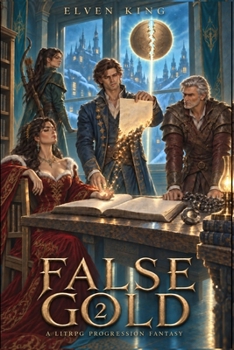
False Gold 2: A LitRPG Progression Fantasy

The room on the wall lane has been open a year. Anybody may walk in off the street, pay a silver, sit in a chair eighteen inches from the window and be told what they are, with the reasons, and it goes in a book on a table that anybody may read.
It works. A captain hires by it. A merchant writes it into her contract. The Reader-General of the Assay has a copy on her desk.
Then a man Owen Pike read on a mounting block a year ago walks in off the road with nothing, puts both hands flat on the table, and asks what the book says about him.
It says Copper, in Owen's own hand. Owen looks at him, and the sight that has never once been wrong says eleven. Iron. Either the sight was wrong then or it is wrong now, and he cannot tell which, and that has never happened.
A man who was Copper on the seventeenth of March and Iron by the thirtieth, on a bridge, under thirty-one tons that nobody wrote down. A captain who hired six men last year without looking and will not hire them now, because now he has looked. A merchant who paid for a paper and wants to know, as a merchant's question, whether a finding goes off. A valuer of fifty-one with a licence, a locked iron box, and a hundred gold of her own standing behind a fund that holds eight gold and ten.
Owen has never once had a number come wrong. He has never once thought to ask what a number does afterwards.
He built an instrument with the same fault as the one he exists to correct. The whole county is about to find that out, and Owen last.
About the seriesA progression fantasy about worth rather than power. A protagonist who cannot fight and never pretends otherwise. A full party, four ways, even shares. A walled guild town where rank is law, a stone that measures what a person has done rather than what they are, and numbers that hold their shape from level one to the end of book seven. No chosen one. No harem. For readers of He Who Fights with Monsters and The Primal Hunter.
Book two of seven. Begins the morning after book one ends.
Customer Reviews
ThriftBooks ® and the ThriftBooks ® logo are registered trademarks of Thrift Books Global, LLC
