





Book Overview
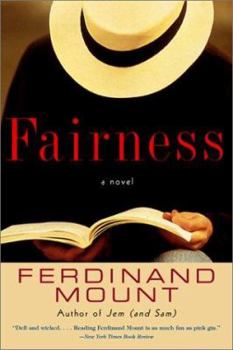
This ingenious and inventive novel--nominated for the Book Prize Long List for 2001 from the award-winning author of Jem (and Sam)--at once comprises an autobiography of Aldous (Gus) Cotton, an English civil servant with breathing problems and chronic sexual learning difficulties, and an erratic history of modern England. It is also and more so the story of Helen Hardress, the serious, slim, blond young woman who quickens Gus's pulse when they first meet in Normandy one summer in the early 1960s as she will, off and on, for the next twenty years. For no one's life is quite the same once Helen Hardress has passed through it. Least of all, that of the long-pining Gus. "Reading Ferdinand Mount is as much fun as pink gin."--Michael Gorra, New York Times Book Review "Fairness is funny, touching, picaresque, decked out with eccentric characters, improbable, artful and, rarest of all, unfailingly entertaining."--Michael Dirda, Washington Post Book World "A quick, witty read with resonance."--Baltimore Sun
Format:Paperback
Language:English
ISBN:0786709928
ISBN13:9780786709922
Release Date:June 2002
Publisher:Carroll & Graf
Length:306 Pages
Weight:0.95 lbs.
Dimensions:5.8" x 0.8" x 8.8"
Customer Reviews
2 ratings
Subtle, Understated, Moving....
Published by Thriftbooks.com User , 23 years ago
As a newcomer to Mount's writing, I admit his style tends to develop slowly for readers expecting more obvious dramatic flair.For whatever reason, Gus reminds me of John Dowell, Ford Madox Ford's ambivalent, wavering, duped, narrator in "The Good Soldier." They both are jilted lovers who gradually realize their idealized conception of the world around them is a facade. This is one of the variations of first-person narration. The common theme is to give the narrator all knowing insight, VOG (voice of god), compared with the mere mortals surrounding them. In this novel, Mount takes the less traveled path. That being, the less than entirely reliable narrator who evokes pity. The possibilities here are usually more interesting. Insomuch as the reader identifies with the author's voice, the learning curve is dynamic and elastic...
Does not travel well "across the Pond."
Published by Thriftbooks.com User , 24 years ago
Ferdinand Mount is an elegant, controlled, and immensely intelligent writer, and his Jem (and Sam) is brilliant. When I saw this new book at the local bookstore, I read the blurbs on the jacket and and bought it on impulse. But while it was pleasant enough reading and offered some interesting morsels to chew on, I found it ultimately disappointing. The third novel in Mount's Chronicle of Modern Twilight, Fairness features the same characters. Unless you have read the other novels, however, you may be as nonplussed as I was by the huge gaps between the characters as described in summaries and on the book jacket, and the same characters as you find them in this novel. This is not Mount's fault, but the potential reader should be cautious. Gus Cotton, the narrator, is a young man who, at the outset of this book, becomes friends with golden-haired Helen, like him working as a nanny/tutor one summer in Normandy. Gus and Helen, their employers, the children and friends of the employers, and even the bookies and racetrack touts from the earlier novels in the series appear and reappear, sometimes in extraordinary coincidences, over the twenty year time span of this novel. Unfortunately, Gus himself is a cipher, too phlegmatic to inspire much sympathy, and not strong enough to hold the myriad characters and long plot line together. Helen is described as aspiring to a morally satisfying life, yet throughout the book she constantly makes self-interested and surprising compromises, and falls into bed with just about everyone. There are few occasions in which we see Helen wrestling with moral decisions--she simply acts, impulsively. Though the blurb-writer calls her a modern female counterpart to Candide, she is actually a mystifying and depressing character, without the obvious naivete one associates with Candide and which allows for lively satire. A government-sanctioned stripping of mineral resources from a Central African country, a miners' strike, and a child abuse investigation feature in the plot and involve both Gus and Helen. While these may be the scandals that have defined--and sometimes shattered--the latter decades of the 20th century for British readers, they are not so familiar to American readers, and their significance pales. Fairness may be an important part of Mount's large scale Chronicle of Modern Twilight. It may develop themes and social commentary significant to the overall success of the Chronicle. As a separate novel, however, it was not an exhilarating or comic experience, at least for this American reader. This rating is three stars for enjoyment, five stars for the writing. Mary Whipple
Copyright © 2026 Thriftbooks.com Terms of Use
| Privacy Policy | Do Not
Sell/Share My Personal Information | Cookie Policy | Cookie Preferences | Accessibility Statement
ThriftBooks® and the ThriftBooks® logo are registered trademarks of Thrift Books Global, LLC
ThriftBooks® and the ThriftBooks® logo are registered trademarks of Thrift Books Global, LLC
