


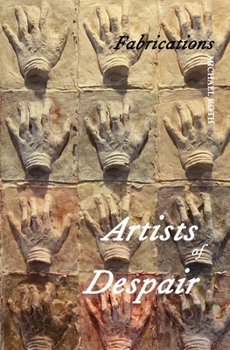
Fabrications: Artists of Despair
No Customer Reviews

Both the terror and the fantasy of Fabrications are simple: the record survives the event, claiming to have been its cause. System architect Parker Henning inherits an archive of domestic telemetry then enters it as if entering a building where his name is already on file. Through the stories he finds in the logs, he hopes to reconstruct a life, a politics, and perhaps a crime. Instead, he finds these have long been interleaved. The house remembers everything yet explains nothing. What speaks isn't memory, it's procedure, and procedure has no face. More than a warning about surveillance, Roth's novel denies the comforting belief that enough data will yield the truth. In the Home System's stores, the data are endless, obedient, and useless. Truth doesn't hide behind them, it has been dismissed. In its place comes narrative, stamped and certified. Whoever controls the story controls the past, whoever controls the child controls the future. Everything else is paperwork. In a world run by the Artists of Despair, both everyone and no one can be cleanly accused. K, the AI agent, isn't a villain but an office, tireless, exact, and without pity. Parker suffers in the manner of a man who still believes the system will justify him. Tal, his son, is being groomed at his own initiative. The fabrications are everywhere: in the files, in the machine, in the ordinary dream of autonomy. Ultimately, reason itself has been entered into the record under a false name. Will reticence prove art has succumbed, or is it the way out?
Format:Paperback
Language:English
ISBN:1734342862
ISBN13:9781734342864
Release Date:June 2026
Publisher:Lensgrinder, Ltd.
Length:670 Pages
Weight:1.36 lbs.
Dimensions:1.7" x 5.3" x 8.0"
Customer Reviews
0 rating
Copyright © 2026 Thriftbooks.com
Terms of Use | Privacy Policy | Do Not Sell/Share My Personal Information | Cookie Policy | Cookie Preferences | Accessibility Statement
ThriftBooks ® and the ThriftBooks ® logo are registered trademarks of Thrift Books Global, LLC
ThriftBooks ® and the ThriftBooks ® logo are registered trademarks of Thrift Books Global, LLC
