


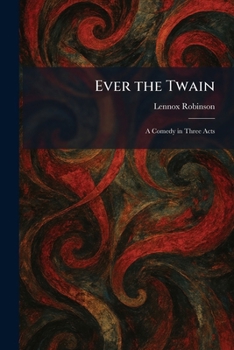
Ever the Twain: A Comedy in Three Acts

"Ever the Twain: A Comedy in Three Acts" is a witty and perceptive play by the renowned Irish dramatist Lennox Robinson. Set against the backdrop of the early 20th century, the comedy explores the intricate and often humorous misunderstandings that arise when diverse cultures collide. The title, an allusion to Rudyard Kipling's famous line, sets the stage for a narrative centered on the perceived unbridgeable gap between Eastern and Western sensibilities-specifically focusing on the interactions between Irish characters and American visitors.
Throughout three engaging acts, Robinson employs his signature sharp dialogue and keen social observation to dissect national stereotypes and personal eccentricities. The play delves into themes of identity, provincialism, and the universal human desire for connection despite vast cultural divides. As the characters navigate a series of comedic situations, the work reflects the broader tensions and fascinations of a world becoming increasingly interconnected.
A significant contribution to modern Irish theater, "Ever the Twain" showcases Robinson's ability to blend lighthearted humor with insightful commentary on the human condition. It remains a compelling study of social manners and the enduring complexity of international relations, making it a valuable work for enthusiasts of classical drama and Irish literature.
This work has been selected by scholars as being culturally important, and is part of the knowledge base of civilization as we know it. This work was reproduced from the original artifact, and remains as true to the original work as possible. Therefore, you may see the original copyright references, library stamps (as most of these works have been housed in our most important libraries around the world), and other notations in the work.
This work is in the public domain in the United States of America, and possibly other nations. Within the United States, you may freely copy and distribute this work, as no entity (individual or corporate) has a copyright on the body of the work.
As a reproduction of a historical artifact, this work may contain missing or blurred pages, poor pictures, errant marks, etc. Scholars believe, and we concur, that this work is important enough to be preserved, reproduced, and made generally available to the public. We appreciate your support of the preservation process, and thank you for being an important part of keeping this knowledge alive and relevant.
Related Subjects
DramaCustomer Reviews
ThriftBooks ® and the ThriftBooks ® logo are registered trademarks of Thrift Books Global, LLC
