


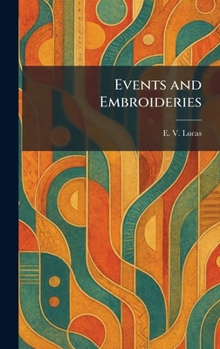
Events and Embroideries

"Events and Embroideries" is a delightful collection of essays by E.V. Lucas, one of the most celebrated masters of the light essay in the early twentieth century. This volume showcases Lucas's signature style-a blend of gentle humor, keen observation, and an effortless ability to find significance in the mundane. The pieces within traverse a wide array of subjects, from the idiosyncrasies of daily life to thoughtful reflections on travel, art, and the natural world.
In this collection, Lucas demonstrates his unique talent for "embroidering" simple events with wit and wisdom, transforming brief encounters and minor incidents into engaging narratives. His prose is characterized by its grace and conversational tone, making the book an inviting experience for readers who appreciate the art of the belle-lettre. Whether discussing the charms of a quiet village or the curiosities of the city, Lucas provides a window into a world viewed through a lens of curiosity and kindness.
"Events and Embroideries" serves as a testament to Lucas's enduring legacy as a chronicler of the human experience. It is a compelling read for fans of classic British literature and those who enjoy the classic essay form as a means of exploring the subtleties of character and culture.
This work has been selected by scholars as being culturally important, and is part of the knowledge base of civilization as we know it. This work was reproduced from the original artifact, and remains as true to the original work as possible. Therefore, you may see the original copyright references, library stamps (as most of these works have been housed in our most important libraries around the world), and other notations in the work.
This work is in the public domain in the United States of America, and possibly other nations. Within the United States, you may freely copy and distribute this work, as no entity (individual or corporate) has a copyright on the body of the work.
As a reproduction of a historical artifact, this work may contain missing or blurred pages, poor pictures, errant marks, etc. Scholars believe, and we concur, that this work is important enough to be preserved, reproduced, and made generally available to the public. We appreciate your support of the preservation process, and thank you for being an important part of keeping this knowledge alive and relevant.
Customer Reviews
ThriftBooks ® and the ThriftBooks ® logo are registered trademarks of Thrift Books Global, LLC
