


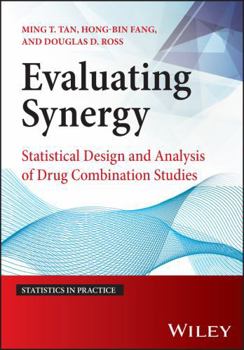
Evaluating Synergy: Statistical Design and Analysis of Drug Combination Studies (Statistics in Practice)

Design and analyze drug combination studies with statistical precision
Identifying synergistic drug combinations requires rigorous statistical methodology to distinguish true interactions from simple additivity. Evaluating Synergy: Statistical Design and Analysis of Drug Combination Studies presents modern methods for optimally designing and analyzing combination studies in cancer, antiviral, and other therapeutic areas. Written by biostatisticians and a physician-scientist with decades of drug development experience, this book integrates statistical theory with practical pharmacology.
The book covers quantitative analysis of dose-effect data and experimental designs for two-drug, three-drug, and multi-drug combinations using systems biology pathway information. Readers gain a practical pipeline for identifying promising combinations through limited experimentation and single-drug data. Case studies demonstrate how efficient experimental design identified synergistic combinations in preclinical models that informed clinical protocols and led to meaningful patient benefit.
Readers will also find: Statistical theory, methods, and computational algorithms for analyzing multidrug combinations, supported by an accompanying website featuring R code and datasets Detailed guidance on distinguishing simple additivity from true drug interactions and interpreting their biological and clinical significance Experimental design approaches for validating selected combinations in both in vivo studies and early-stage clinical trials across therapeutic areas Applications to herbal formulation design in phytomedicine and traditional Chinese medicine using systems biology and pathway information Real-world examples showing how preclinical findings translated to clinical development, including a cancer trial demonstrating significant patient benefit
Designed for scientists in translational research, statisticians in drug development, and researchers in biostatistics and pharmacology, Evaluating Synergy serves as both a practical reference and an upper-graduate and graduate-level textbook. Readers need only a foundation in introductory statistics and linear regression.
Customer Reviews
ThriftBooks ® and the ThriftBooks ® logo are registered trademarks of Thrift Books Global, LLC
