


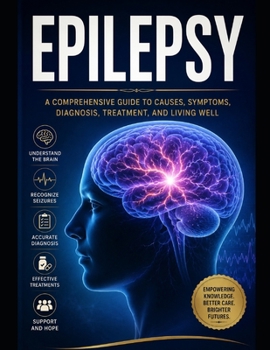
Epilepsy: Understanding Seizures and Brain Disorders
No Customer Reviews

Epilepsy is one of the oldest known neurological disorders in human history. For thousands of years, people have observed seizures with fear, curiosity, misunderstanding, and often superstition. Ancient civilizations frequently associated epilepsy with spiritual forces, divine punishment, or supernatural explanations because the sudden and dramatic nature of seizures appeared mysterious and difficult to understand. Millions of people worldwide live with recurrent seizures. Many face not only medical difficulties, but also social stigma, educational disruption, employment barriers, psychological stress, unequal access to healthcare, and long-term uncertainty regarding treatment outcomes. In many parts of the world, people with epilepsy continue to experience discrimination and delayed access to even basic neurological care.
This book was created with the goal of presenting a comprehensive scientific understanding of epilepsy while remaining accessible to students, researchers, healthcare learners, and general readers interested in modern neurological medicine.
The purpose of this book is not simply to describe seizures.
It aims to explain epilepsy from multiple interconnected perspectives.
Throughout these chapters, readers explore: The history of epilepsy and how human understanding evolved over centuriesThe structure and function of the nervous system underlying seizure activityThe biological and electrical mechanisms responsible for abnormal brain activityClassification of seizure types and epilepsy syndromesDiagnostic methods such as EEG, MRI, and neurological examinationCurrent medical treatments including anti-seizure medications and surgical therapyGenetic and molecular mechanisms influencing inherited epilepsy disordersEmergency seizure management and proper first aid responsesLong-term lifestyle management strategies for improving quality of lifeGlobal public health challenges affecting epilepsy careEmerging research involving artificial intelligence, gene therapy, precision medicine, neurotechnology, and future therapeutic innovationsOne of the most important lessons in epilepsy research is that this disorder extends far beyond seizures themselves.
Epilepsy affects education, employment, mental health, family life, independence, and social inclusion. Successful treatment therefore requires more than medication alone. It demands scientific understanding, compassionate healthcare systems, public awareness, social support, and continued research investment.
Another important purpose of this book is to highlight how epilepsy research contributes to broader scientific knowledge about the human brain.
Studying epilepsy helps scientists understand: How neurons communicate electricallyHow brain networks synchronize activityHow genetic mutations alter neural functionHow consciousness, memory, and movement depend on stable neural circuitryHow technology can directly interact with brain activity through advanced medical devicesIn many ways, epilepsy serves as a window into understanding fundamental principles of neuroscience itself.
This book also emphasizes the remarkable progress made by organizations such as: World Health OrganizationInternational League Against EpilepsyInternational Bureau for EpilepsyThese institutions, along with scientists, physicians, neuroscientists, genetic researchers, public health experts, and patient advocacy communities, continue working toward a future where epilepsy can be diagnosed earlier, treated more effectively, and perhaps one day prevented or cured entirely.
Emerging technologies such as: Artificial IntelligenceGene TherapyBrain-Computer InterfacePrecision Medicine
This book was created with the goal of presenting a comprehensive scientific understanding of epilepsy while remaining accessible to students, researchers, healthcare learners, and general readers interested in modern neurological medicine.
The purpose of this book is not simply to describe seizures.
It aims to explain epilepsy from multiple interconnected perspectives.
Throughout these chapters, readers explore: The history of epilepsy and how human understanding evolved over centuriesThe structure and function of the nervous system underlying seizure activityThe biological and electrical mechanisms responsible for abnormal brain activityClassification of seizure types and epilepsy syndromesDiagnostic methods such as EEG, MRI, and neurological examinationCurrent medical treatments including anti-seizure medications and surgical therapyGenetic and molecular mechanisms influencing inherited epilepsy disordersEmergency seizure management and proper first aid responsesLong-term lifestyle management strategies for improving quality of lifeGlobal public health challenges affecting epilepsy careEmerging research involving artificial intelligence, gene therapy, precision medicine, neurotechnology, and future therapeutic innovationsOne of the most important lessons in epilepsy research is that this disorder extends far beyond seizures themselves.
Epilepsy affects education, employment, mental health, family life, independence, and social inclusion. Successful treatment therefore requires more than medication alone. It demands scientific understanding, compassionate healthcare systems, public awareness, social support, and continued research investment.
Another important purpose of this book is to highlight how epilepsy research contributes to broader scientific knowledge about the human brain.
Studying epilepsy helps scientists understand: How neurons communicate electricallyHow brain networks synchronize activityHow genetic mutations alter neural functionHow consciousness, memory, and movement depend on stable neural circuitryHow technology can directly interact with brain activity through advanced medical devicesIn many ways, epilepsy serves as a window into understanding fundamental principles of neuroscience itself.
This book also emphasizes the remarkable progress made by organizations such as: World Health OrganizationInternational League Against EpilepsyInternational Bureau for EpilepsyThese institutions, along with scientists, physicians, neuroscientists, genetic researchers, public health experts, and patient advocacy communities, continue working toward a future where epilepsy can be diagnosed earlier, treated more effectively, and perhaps one day prevented or cured entirely.
Emerging technologies such as: Artificial IntelligenceGene TherapyBrain-Computer InterfacePrecision Medicine
Format:Paperback
Language:English
ISBN:B0H68BB4JG
ISBN13:9798183601411
Release Date:June 2026
Publisher:Independently Published
Length:268 Pages
Weight:1.38 lbs.
Dimensions:0.6" x 8.5" x 11.0"
Customer Reviews
0 rating
Copyright © 2026 Thriftbooks.com
Terms of Use | Privacy Policy | Do Not Sell/Share My Personal Information | Cookie Policy | Cookie Preferences | Accessibility Statement
ThriftBooks ® and the ThriftBooks ® logo are registered trademarks of Thrift Books Global, LLC
ThriftBooks ® and the ThriftBooks ® logo are registered trademarks of Thrift Books Global, LLC
