


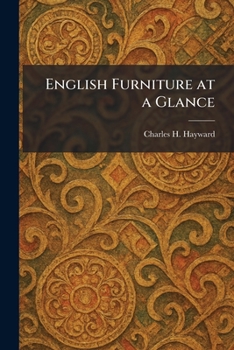
English Furniture at a Glance

Select Format
Select Condition 
Book Overview
"English Furniture at a Glance" provides a comprehensive and accessible visual guide to the historical evolution of furniture design in England. Covering a wide span of centuries, this work serves as an invaluable tool for identifying the distinct characteristics and stylistic shifts that define various periods of British craftsmanship. From the robust oak constructions of the Tudor era to the refined elegance of the Georgian and Regency periods, the book systematically breaks down the defining features of each age.
Expertly structured for both the amateur enthusiast and the serious collector, the work emphasizes the importance of proportion, ornamentation, and material choice. Detailed illustrations accompany the text, highlighting specific elements such as leg shapes, joinery, and decorative carvings that distinguish one style from another. By tracing the development of chairs, tables, cabinets, and other household staples, it offers a window into the changing social habits and aesthetic preferences of the English people.
Whether used as a field guide for antique auctions or as a reference for students of design, "English Furniture at a Glance" remains a vital resource for understanding the rich legacy of English interior arts. It celebrates the skill of historic cabinetmakers and provides a clear framework for appreciating the enduring beauty of period furniture.
This work has been selected by scholars as being culturally important, and is part of the knowledge base of civilization as we know it. This work was reproduced from the original artifact, and remains as true to the original work as possible. Therefore, you may see the original copyright references, library stamps (as most of these works have been housed in our most important libraries around the world), and other notations in the work.
This work is in the public domain in the United States of America, and possibly other nations. Within the United States, you may freely copy and distribute this work, as no entity (individual or corporate) has a copyright on the body of the work.
As a reproduction of a historical artifact, this work may contain missing or blurred pages, poor pictures, errant marks, etc. Scholars believe, and we concur, that this work is important enough to be preserved, reproduced, and made generally available to the public. We appreciate your support of the preservation process, and thank you for being an important part of keeping this knowledge alive and relevant.
Customer Reviews
ThriftBooks ® and the ThriftBooks ® logo are registered trademarks of Thrift Books Global, LLC
