


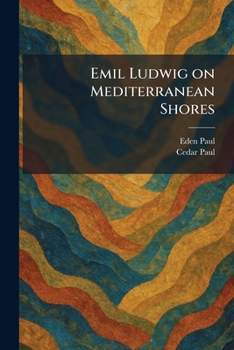
Emil Ludwig on Mediterranean Shores

"Emil Ludwig on Mediterranean Shores" is a captivating travel narrative that explores the cradle of Western civilization during the early 20th century. Translated by the prolific duo Eden and Cedar Paul, this work captures the essence of the Mediterranean world, from the bustling ports of Genoa and the sun-drenched landscapes of Sicily to the ancient mysteries of Egypt and the evolving territories of Palestine and Turkey.
Rather than a mere guidebook, Ludwig offers a series of evocative essays that blend historical insight with personal observation, contemplating the intersection of diverse cultures, religions, and empires. His journey takes readers across the blue waters to North Africa and the Levant, providing a vivid snapshot of a region steeped in history yet standing on the brink of modern transformation. Through his sharp prose and keen eye for detail, Ludwig examines the enduring spirit of the Mediterranean people and the timeless beauty of their landscapes. This volume remains an essential piece of travel literature for those interested in the cultural geography of the Interwar period and the perennial allure of the Mediterranean basin.
This work has been selected by scholars as being culturally important, and is part of the knowledge base of civilization as we know it. This work was reproduced from the original artifact, and remains as true to the original work as possible. Therefore, you may see the original copyright references, library stamps (as most of these works have been housed in our most important libraries around the world), and other notations in the work.
This work is in the public domain in the United States of America, and possibly other nations. Within the United States, you may freely copy and distribute this work, as no entity (individual or corporate) has a copyright on the body of the work.
As a reproduction of a historical artifact, this work may contain missing or blurred pages, poor pictures, errant marks, etc. Scholars believe, and we concur, that this work is important enough to be preserved, reproduced, and made generally available to the public. We appreciate your support of the preservation process, and thank you for being an important part of keeping this knowledge alive and relevant.
Related Subjects
TravelCustomer Reviews
ThriftBooks ® and the ThriftBooks ® logo are registered trademarks of Thrift Books Global, LLC
