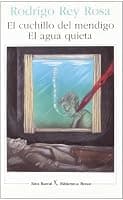
Set in Guatemala, these spare and beautiful tales are linked by themes of magic, violence, and the fragility of existence. Paul Bowle's translation perfectly captures Rey Rosa's stories of the haunted lives of ordinary people in present-day Central America.
A genuinely surprising and original set of stories...a sense of violent unease shading into terror drifts up from every line...his writing has a sharp, almost sadistic edge. --The Times Literary Supplement
Compelling in the extreme...these twelve tales (that) boast of hidden dangers and lurking terrors, are written in a deceptively undramatic style, with masterful restraint. Stories that continue to disturb and delight long after they are laid to rest. --Blitz
Twelve tales--many evoking the uncanny, most with surprise endings--explore how people seek to gain power from others. . . . Rey Rosa writes about danger and precarious stability in an effective, straightforward style. --Kirkus Reviews
Rodrigo Rey Rosa (born November 4, 1958) is a Guatemalan writer. He has based many of his writings and stories on legends and myths that are indigenous to Latin American as well as North Africa. A number of Rey Rosa's works have been translated into English, including; The Path Doubles Back (by Paul Bowles), The Pelcari Project, The Beggar's Knife, The African Shore, and Severina.