


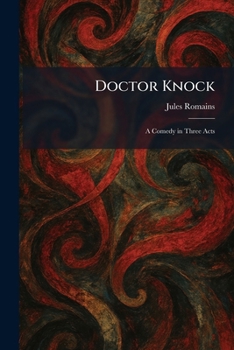
Doctor Knock: A Comedy in Three Acts

"Doctor Knock a Comedy in Three Acts" is a satirical masterpiece by Jules Romains that explores the power of suggestion and the commercialization of medicine. Set in the small mountain village of Saint-Maurice, the story follows the arrival of the ambitious Dr. Knock, who takes over a medical practice with no patients. Through masterful psychological manipulation and the clever exploitation of human insecurity, Knock convinces the healthy inhabitants that they are actually suffering from undiagnosed illnesses.
This brilliant comedy of manners serves as a sharp critique of medical ethics and the ease with which public opinion can be swayed by perceived authority. As the village is transformed into a giant clinic, Romains delivers a humorous yet chilling observation of how "healthy people are just sick people who don't know it yet." As a cornerstone of modern drama, "Doctor Knock a Comedy in Three Acts" offers a timeless reflection on the intersection of science, commerce, and human nature, making it a compelling read for those interested in social satire and the history of medical thought.
This work has been selected by scholars as being culturally important, and is part of the knowledge base of civilization as we know it. This work was reproduced from the original artifact, and remains as true to the original work as possible. Therefore, you may see the original copyright references, library stamps (as most of these works have been housed in our most important libraries around the world), and other notations in the work.
This work is in the public domain in the United States of America, and possibly other nations. Within the United States, you may freely copy and distribute this work, as no entity (individual or corporate) has a copyright on the body of the work.
As a reproduction of a historical artifact, this work may contain missing or blurred pages, poor pictures, errant marks, etc. Scholars believe, and we concur, that this work is important enough to be preserved, reproduced, and made generally available to the public. We appreciate your support of the preservation process, and thank you for being an important part of keeping this knowledge alive and relevant.
Customer Reviews
ThriftBooks ® and the ThriftBooks ® logo are registered trademarks of Thrift Books Global, LLC
