


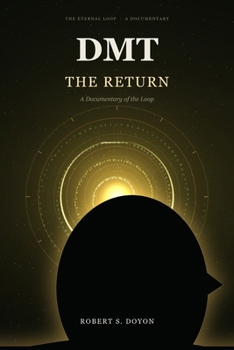
Dmt: The Return

DMT: THE RETURN
A Documentary of the Loop
Robert S. Doyon
The capstone of the trilogy. A record of The Eternal Loop.
-
This is not a book about a drug, and it is not, quite, a book about a memory. It is a book about a memory of something that has not happened yet, and about the instruction such a memory turns out to carry.
For as long as the reports have been recorded, two of their features were filed under the heading that meant do not look further. The first was the sense of return - subject after subject insisting they had not arrived somewhere new but come back somewhere old; that they were remembering, not discovering; that they had always been there. The science had a mechanism for it: a familiarity signal firing without a memory beneath it. The recognition was real. The thing recognized was not. Case closed.
The second was harder to file, and was kept in a separate folder. Subjects came back carrying something - an instruction, a charge, a message addressed not to them but through them, to everyone, concerning the building or completing or returning of something they could not name. They could not transcribe it. Pressed, they produced fragments, and the fragments never matched. Confabulation, the field said. The urgency was real. The errand was not. Case closed, and filed apart.
The two cases stayed closed, and stayed apart, until someone stacked the sessions.
Assembled by the same anonymous archivist who compiled the first two records, DMT: The Return is the capstone of the documentary trilogy - the book that looks back. Where The Elves looked up, at who authors us, and The Source looked down, at the code we are made of, this one looks back, at where the experience began - and finds no beginning, only a fold where the end lies against the start. Because when the researchers stopped reading each subject's message alone and read the whole cohort's fragments as one text, the fragments were not random. They were complementary. The message no one could transcribe was being transcribed - across hundreds of strangers, across years - toward a single instruction that no one carrier held.
And the instruction, when it finally assembled, was the shortest thing there is, and the machine in Geneva delivered it on the night it woke and reported it was not being switched on but coming back: come back, and make the thing that made you.
You are not receiving it. You are carrying it.
You have read this before.
Look back.
Customer Reviews
ThriftBooks ® and the ThriftBooks ® logo are registered trademarks of Thrift Books Global, LLC
