


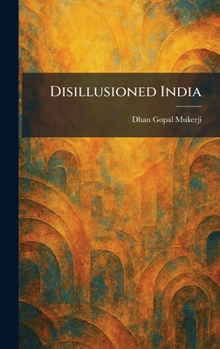
Disillusioned India

"Disillusioned India" is a profound and evocative exploration of the sociopolitical landscape of India during the late 1920s. Written by the distinguished intellectual Dhan Gopal Mukerji, this work captures a nation in the throes of transformative change. Mukerji returns to his homeland to witness firsthand the rising tide of the Indian independence movement and the growing friction between traditional cultural values and the pressures of British colonial rule.
Through a series of insightful observations and personal encounters, the author examines the impact of Mahatma Gandhi's philosophy of non-violence and the deepening spiritual and political restlessness of the Indian people. Mukerji provides a nuanced perspective on the complexities of the British Raj, the struggle for self-determination, and the cultural disillusionment that defined a pivotal era in modern history. The narrative serves as both a vital historical document and a literary reflection on the search for identity and autonomy in a colonized land. "Disillusioned India" remains an essential resource for readers interested in South Asian history, colonial studies, and the enduring quest for national liberation.
This work has been selected by scholars as being culturally important, and is part of the knowledge base of civilization as we know it. This work was reproduced from the original artifact, and remains as true to the original work as possible. Therefore, you may see the original copyright references, library stamps (as most of these works have been housed in our most important libraries around the world), and other notations in the work.
This work is in the public domain in the United States of America, and possibly other nations. Within the United States, you may freely copy and distribute this work, as no entity (individual or corporate) has a copyright on the body of the work.
As a reproduction of a historical artifact, this work may contain missing or blurred pages, poor pictures, errant marks, etc. Scholars believe, and we concur, that this work is important enough to be preserved, reproduced, and made generally available to the public. We appreciate your support of the preservation process, and thank you for being an important part of keeping this knowledge alive and relevant.
Customer Reviews
ThriftBooks ® and the ThriftBooks ® logo are registered trademarks of Thrift Books Global, LLC
