


All Formats & Editions
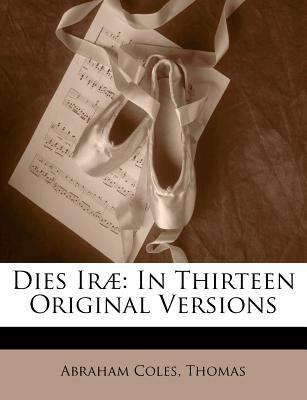
Dies Iræ: In Thirteen Original Versions
The Dies Irae (1883)
The Dies Irae (1883)
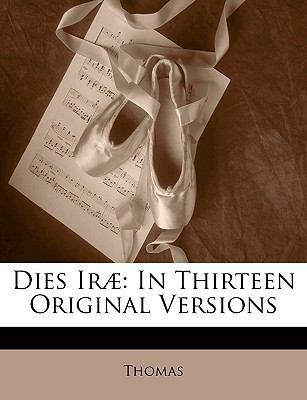
Dies Iræ: In Thirteen Original Versions
Dies Irae
Dies Irae in Thirteen Original Versions
"Dies Irae in Thirteen Original Versions" presents a comparative study of one of the most powerful and enduring poems in the Christian tradition. This collection brings together thirteen distinct renditions of the "Dies Irae," offering readers a unique opportunity to explore...
Dies Irae: In Thirteen Original Versions
Dies Irae: As Rendered Into English
"Dies Irae," a celebrated medieval Latin hymn, receives a new rendering into English in this timeless edition. Attributed to Thomas of Celano, this powerful poem vividly depicts the Day of Judgment, exploring themes of divine wrath, repentance, and ultimate salvation. This...
The Dies Irae (1883)
The Dies Irae is a Latin hymn that has been a staple of the Catholic Church for centuries. It is a powerful and haunting piece of music that speaks to the human experience of mortality and the inevitability of judgment. In this book, Thomas de Celano explores the history and...
Dies Iræ: In Thirteen Original Versions
This work has been selected by scholars as being culturally important, and is part of the knowledge base of civilization as we know it. This work was reproduced from the original artifact, and remains as true to the original work as possible. Therefore, you will see the original...
The Dies Irae (1883)
The Dies Irae is a Latin hymn that has been used in Catholic liturgy for centuries. It is a powerful and haunting piece that speaks of the day of judgment and the fear and trembling that will come with it. In 1883, Thomas De Celano wrote a book about the hymn, exploring its history,...

Dies Irae
This work has been selected by scholars as being culturally important, and is part of the knowledge base of civilization as we know it. This work was reproduced from the original artifact, and remains as true to the original work as possible. Therefore, you will see the original...

The Dies Irae
The Dies Irae. An English Version in Double Rhymes, with an Essay and Notes. This book, "The Dies Irae", by Franklin Johnson, is a replication of a book originally published before 1883. It has been restored by human beings, page by page, so that you may enjoy it in a form as...
Dies Irae: In Thirteen Original Versions
This is a reproduction of a book published before 1923. This book may have occasional imperfections such as missing or blurred pages, poor pictures, errant marks, etc. that were either part of the original artifact, or were introduced by the scanning process. We believe this...
ThriftBooks ® and the ThriftBooks ® logo are registered trademarks of Thrift Books Global, LLC
