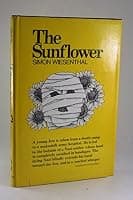
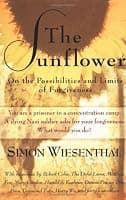
This book takes a uniquely difficult situation and asks us what would we have done (in regards to a nazi on his death bed asking a person stuck in concentration camps for forgiveness). It is very interesting hearing all the prospectives on what people believe they would have/should have done.
2
★★★★★
Often think about this book years later
By Thriftbooks.com User, December 7, 2017
I read this book my senior year of high school for a history project. I quickly became engulfed in it and struggled to put it down. This book really gets you thinking about the concept of forgiveness and morality. It was a great read.
3
★★★★★
This story will make you look at things differently!
By Thriftbooks.com User, July 5, 2009
I approached this book speculating on what I would have done if I was placed in Simon's situation. After reading Karl's testimony numerous times and the sentiments expressed in the Symposium, I pondered the question days later. The reader doesn't necessarily have to make a decision, but this book offers an array of opinions which enables even further rumination. Truly a Wonerful and powerful read!
2
★★★★☆
On the subject of forgiveness
By Thriftbooks.com User, May 4, 2009
This book really gave me insight into the issue of forgiveness. Can one person forgive in the name of thousands who were offended?
0
★★★★★
Inspirational but real
By Thriftbooks.com User, February 16, 2001
I was given this book to read for my Fundamental Ethics course last semester. At first I thought, "What a chore," but then as I immersed myself in the reading of this book, I began to get involved in the reading. I could see the sights, smell the air, hear the sounds, and touch the people that Simon was surrounded by, I felt I was one of them. Very few times in my life has a book had such a captivating effect on me. It also resembles the book Night, by Elie Weisel, in which they share some of the same experiences and captivate the reader to the such a profound extent.While reading I found myself, not only captivated by the words, but also at the meaning behind the words. "I could easily be in his position, or something similar," I thought. Simon Weisenthal demonstrates a very real dilema and view of forgiveness which we often take for granted, or many times we don't think about. He is faced with a problem and does not know what to do about it.He made an ethical decision that had consequences he had to answer for. Also, there arises the question of religion into the whole sphere of the dilema.As a result, Simon Weisenthal ends the first part of the book with certain questions. The second part of the book are the replies by quite a number of religious and political leaders, theologians, philosophers, psychologists, holocaust survivors, lawyers, and many different professionals, giving witness to what they would have done, if confronted with the same situation as Simon.The book is so profound that one can see it interacting in one's daily life. From the little things that we take for granted, to those that we make a "big deal" out of, we will see with new eyes, after having read this book.It is a book that is for every reader and, I recommend be read several times in one's life. In other words, the book is living thought and helps tp renew not only one's knowledge, but also, experience.
3
★★★★★
Wiesenthal better than the symposium
By Thriftbooks.com User, June 11, 1998
Simon Wiesenthal authored a first rate book, one that should be read by everyone the world over, for it deals with problems that all societies struggle with in trying to achieve peace: forgiveness, justice, and grace. To what extent are we enabled to offer forgiveness on behalf of another, especially when the crimes committed are of almost unspeakable atrocity? Wiesenthal's story is gripping, moving, and haunting, a true encounter that provokes repeated pondering and contemplation. I don't have the 1997 revised version of the book containing the responses of 46 people in a symposium discussion, but I can say that in the original 32 responses, I read very few that contained a cogency and depth equal to that of Wiesenthal's story. While a handful were good, most were evasive. I therefore found the second half of the book to be a disappointment. THE SUNFLOWER, though, is worth getting just to read Wiesenthal's treatment, which is first rate. Philip Yancey also offers some thoughtful comments in a chapter from his book of essays entitled I WAS JUST WONDERING (beginning on page 70 under the title "A Haunting Deathbed Confession".)