


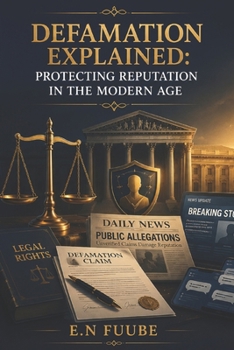
Defamation Explained: Protecting Reputation in the Modern Age

Understand Defamation, Protect Your Reputation, and Learn How the Law Responds to Harmful Statements
Reputation can influence personal relationships, employment opportunities, business success, and professional standing. In today's connected world, a statement can spread from a private conversation to thousands of people within minutes, making defamation an increasingly important legal issue. Understanding what constitutes defamation and how the law responds can help individuals communicate responsibly while protecting themselves when their reputation is unfairly harmed.
Defamation Explained provides a clear and practical introduction to the principles surrounding reputational harm. From traditional libel and slander to social media posts, online reviews, viral content, and emerging challenges involving artificial intelligence, this book explains the subject in straightforward language for readers who want to understand how reputation protection works.
What You'll Find Inside This Book1. Understanding Defamation - Learn what defamation means, why reputation matters, how defamation law developed, and why modern technology has created new challenges for protecting reputation.
2. Elements of a Defamation Claim - Explore defamatory statements, identification of the person affected, publication requirements, and the types of harm that may form part of a defamation claim.
3. Libel and Slander - Understand the distinction between written and spoken defamation, examine their key differences, and explore practical examples of how each can arise.
4. Online Defamation - Discover how social media posts, blogs, websites, online reviews, and viral content can create reputational risks in the digital age.
5. Defenses to Defamation - Learn about important defenses including truth, honest opinion, privilege, and public interest, and understand why context can be critical in defamation disputes.
6. Proving Harm - Explore financial losses, emotional harm, professional damage, and the evidence that may be relevant when demonstrating the impact of allegedly defamatory statements.
7. Remedies for Defamation - Understand potential remedies such as monetary compensation, apologies, retractions, court injunctions, and measures aimed at restoring a damaged reputation.
8. Defamation and the Media - Examine journalistic responsibilities, investigative reporting, issues involving public figures, and the relationship between reputation protection and freedom of the press.
9. Preventing Defamation Disputes - Learn practical approaches to responsible communication, fact-checking, managing online content, and recognizing legal risks before they develop into disputes.
10. The Future of Reputation Protection - Explore emerging digital challenges, artificial intelligence and defamation, international issues, and practical approaches to responsible reputation management.
Why This Book Is a Must-HaveDefamation law matters because words can have lasting consequences. A false allegation can affect someone's career, business, relationships, financial position, or standing within their community, while careless communication can expose individuals and organizations to avoidable legal disputes.
This book helps readers understand the principles behind defamation claims and defenses while showing how traditional reputation law is being tested by social media, digital publishing, viral content, and artificial intelligence. Whether you're a law student, journalist, business owner, content creator, professional, or everyday reader, you'll gain useful knowledge for recognizing reputational risks and understanding the legal issues that can arise when harmful statements are published.
#DefamationLaw #ReputationProtection #MediaLaw #InternetLaw #LegalStudies #LawBooks
Related Subjects
LawCustomer Reviews
ThriftBooks ® and the ThriftBooks ® logo are registered trademarks of Thrift Books Global, LLC
