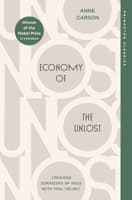
Decreation: Poetry, Essays, Opera (by the Winner of the Nobel Prize in Literature)
Conditions
A brand-new, unused copy in perfect condition.
Formats
Conditions
A brand-new, unused copy in perfect condition.
Conditions
A brand-new, unused copy in perfect condition.
Formats
Conditions
A brand-new, unused copy in perfect condition.
One of the most interesting gatherings of material that any poet has published within living memory. --The Economist
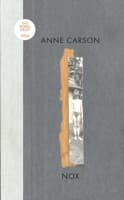
Simone Weil described "decreation" as "undoing the creature in us" -- an undoing of self. In her first collection in five years, Anne Carson explores this idea with characteristic brilliance and a tantalizing range of reference, moving from Aphrodite to Antonioni, Demosthenes to Annie Dillard, Telemachos to Trotsky, and writing in forms as varied as opera libretto, screenplay, poem, oratorio, essay, shot list, and rapture. As she makes her way through these forms she slowly dismantles them, and in doing so seeks to move through the self, to its undoing. Cool, resolute, smart, and lovely.... Carson has emerged in the last two decades as a kind of prophet of the unknowable. --The Village VoiceAnne Carson was born in Canada and now lives partly in Iceland. She is an acclaimed poet, essayist, translator, and classicist, and has won numerous awards, including a MacArthur, the PEN/Nabokov Award, the T. S. Eliot Prize, the Los Angeles Times Book Prize, and the 2026 Nobel Prize in Literature. Her books Autobiography of Red and Nox were both finalists for the National Book Critics Circle Award in Poetry.
Excellent, eccentric gathering of poetical forms. I’m a big fan of Ms. Carson’s writing. Easy to pick up and read a section, and a wonderful book to keep on the nightstand. Wish the paper quality was better, but it is what it is.
Everyone should read this book! It examines Simone Weil, Stevens, and other Modern and Contemporary Poets. I adore this book. "Nothing that is not there and THE nothing that is." Beautiful, moving, thrilling, lucid and sublime.
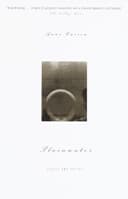
Decreation is coy, playful, obscure, difficult & profound. In other words - it is experimental, like other works by Anne Carson. Where is the tiny give that begins to give you entry? The book is transparent - yes, but slippery (note the undergarment photographed like a jellyfish on the cover). In the book are tableaus of different approaches to annihilation featuring Sam Beckett and God, Marguerite Porete and God, Simone Weil and God. In the interludes, witness Sokrates and Demosthenes the orator "who knows how to make his nouns rain like blows", Virginia Woolf and Elizabeth Bishop together in a sleep-assay that describes To the Lighthouse as a "novel that falls asleep in the middle". Decreation also contains an hommage to Antonioni, as strange and beautiful as Antonioni's films. Perhaps the "give" you're looking for is on page 46, where Carson recounts Antonioni directing Lucia Bose in Story of a Love Affair - "To obtain the results I wanted I had to use insults, abuse, hard slaps." Then again maybe not. But just when you think you're in here's another clue from AC - "If God were knowable, why would we believe in him?" Slap!
Intelligence has no other name than Anne Carson. And "Decreation" proves that Ms. Carson has not lost the good of intellect as she pursues an incomphrehensible sublime through the intricate paths that connect the uber-sublime Simone Weil, Margerate Porete, Longinus, the negative theology of Samuel Beckett, and a thousand other things, themes, and people. Though not all of the pieces in this volume are verse all are pure poetry shifting through an intense tesseract where things that are most traditional are radically re-interpreted in direction that is surreal, avant-garde, and yet classical. This kind of work is an example of what strong poets should be attempting to do today and it is one reason why Ms. Carson is the brightest bard of our hour, worthy to stand on the heights with Emily Dickinson and Paul Celan. As I read these poems and essays I feel that my own imagination and intellect are struck by a light that is feminine and precise, strong, even rutheless, breath taking in its wilful ascents and descents, and firmly dedicated to its own unique spiritual quest. There are passages in the poems in which I encountered the truly indescribable. Few are the poets these days that will dare to take on such possiblities and labors. Most poets writing are grinding out stuff that sounds like the slightly piqued pseudo-spiritual musings of third-rate diarists. But not Ms. Carson. I must confess I can hardly wait for her next volume but for now I have too much to ponder as I watch my own mind quietly re-organized by Anne Carson's on-going aesthetic triumphs.