


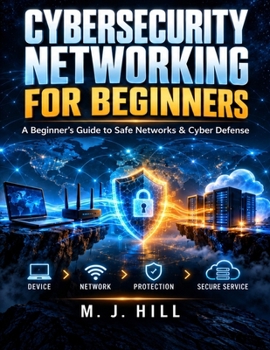
Cybersecurity Networking for Beginners: A Practical, Step-By-Step Guide to Understanding, Securing and Troubleshooting Networks

Understand the network. Recognise the risk. Know what to check next.
A device shows that it is connected, yet an application still won't load. The firewall reports an allowed connection, but the user is getting nowhere. Is it DNS, routing, a security rule-or something else?
Cybersecurity Networking for Beginners takes the mystery out of these everyday problems.
Across 15 focused chapters, M. J. Hill explains how modern networks work, where security controls fit, and how to investigate an issue without guessing or making matters worse.
Inside, you'll learn how to:
Follow a connection from device to service using TCP/IP, switches, routers, DNS and firewalls.
Make sense of IPv4, IPv6, subnetting, VLANs, routing and access control lists.
Understand wireless security, encryption, TLS, VPNs, identity and network segmentation.
Read the evidence in logs, traffic captures and practical troubleshooting scenarios.
Recognise common threats and understand the fundamentals of defensive response, cloud access and Zero Trust.
Test your thinking with chapter questions, guided exercises and answer explanations.
You'll also find an essential ports-and-protocols reference and a plain-English glossary of 100 useful terms.
Written for curious beginners, students, career changers, self-learners and people starting out in IT support, this book focuses on something more valuable than memorising technical jargon: understanding what should happen, spotting when it doesn't, and choosing a sensible next step.
Build a clearer foundation in networking and cybersecurity-one connection, one decision and one practical example at a time.
Customer Reviews
ThriftBooks ® and the ThriftBooks ® logo are registered trademarks of Thrift Books Global, LLC
