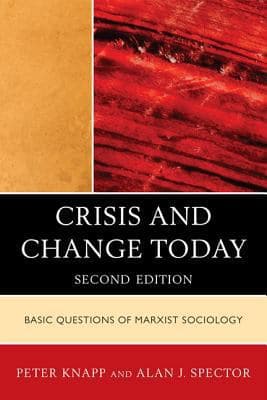
Crisis and Change Today provides a solid introduction to Marxist social theory. The work's unique voice is expressed in its Socratic-dialogic approach, structured around forty questions that students have about society and social change. Topics range from theories of history, economics, unemployment, racial oppression, the state, fascism, the collapse of the Soviet bloc, and points of convergence and difference between the dialectical approach and other approaches to social science. The content and tone of the work invites students to evaluate various traditional and current explanations of social institutions and social processes and encourages them to weigh the debates and investigate further.
The first edition was very well received (Distinguished Scholarship Award of the Section on Marxist Sociology of the ASA), and the second edition has been thoroughly revised and updated to be relevant for students today. Though the first edition was written during the wake of the fall of the Berlin Wall and the collapse of the Soviet Union, the growing gap between the rich and the poor and the economic crisis have generated more interest in using Marxist analysis both as a tool to analyze and understand capitalism and the weaknesses of past Marxist praxis. This description may be from another edition of this product.