Coyote Stories
Conditions
An apparently unread copy in perfect condition.
Formats
Conditions
An apparently unread copy in perfect condition.
Conditions
An apparently unread copy in perfect condition.
Formats
Conditions
An apparently unread copy in perfect condition.
Here is Coyote, the trickster, the selfish individualist, the imitator, the protean character who indifferently puts the finishing touches on a world soon to receive human beings. And here is Mole, his long-suffering wife, and all the other Animal People, including Fox, Chipmunk, Owl-Woman, Rattlesnake, Grizzly Bear, Porcupine, and Chickadee. Here it is revealed why Skunk's tail is black and white, why Spider has such long legs, why Badger is so humble, and why Mosquito bites people. These entertaining, psychologically compelling stories will be welcomed by a wide spectrum of readers.
Jay Miller has supplied an introduction and notes for this Bison Books edition and restored chapters that were deleted from the original.
As a child (45-50 years ago), I read this book while visiting my Grandmother on the Yakama Indian Reservation. Reading the book again reminded me that cultural stories have a theme and thought pattern to them that includes common sense. In other words, that we now know that Coyote is not the supreme ruler of the animal world does not diminish the lessons that each story contains. A simple, excellent work that will acquaint even the most intellectual person with a world some say no longer exists.
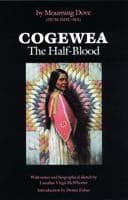
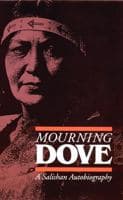
Mourning Dove, (Hu-mis-hu-ma) is the pen name of Christine Quintasket, a member of the Colville Reservation of north central Washington. She had little schooling and even less exposure to literature, however she was determined to be a writer of fiction, particularly in her collections of Native American folk lores. She sought out the aged members of the communities near her home and carefully wrote the stories and legends she heard. Mourning Dove thought it was important to write down these stories, which, up to that time, were mostly oral history, because she feared that each story and tradition would be lost as members moved away from the tribe and into western or white civilizations. While the stories of Coyote, (the coyote represented that irrepressible joker and alternate savior of many tribes) as recorded here, have been "santitized" since Mourning Dove thought they were too "ugly" to write about. Coyote is shown in this book at his best and his worst with special powers to summon help for people when needed. He is earthy and greedy, and filled with gluttony and lust. As a precaution, Coyote was given a kinsman to deter him, a Fox, who was able to restore life. Mourning Dove leaves behind the stories she heard around many a cold evening or near a council fire. This book is edited and illustrated by Heister Dean Guie with notes by L.V. McWhorter (Old Wolf) and a foreword by Chief Standing Bear, Oglala Sioux. First published in 1934, this book harks back to time when Native American civilization still had some of their stories left to tell and is vital to read because of the time period in which it was written. This book is often considered "required reading" in some college classes which are enlightened about the value of Native American stories. Let us hope many more will take the time to review these stories in light of their own stories. Was this helpful to you?
Published by Terry FlemingApril 25, 2022