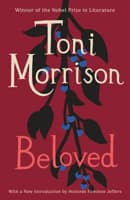
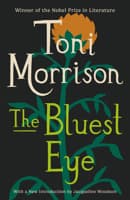
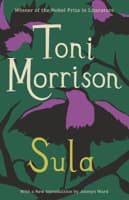
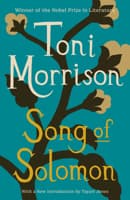
Conversations with Toni Morrison
Conditions
A brand-new, unused copy in perfect condition.
Formats
Conditions
A brand-new, unused copy in perfect condition.
Conditions
A brand-new, unused copy in perfect condition.
Formats
Conditions
A brand-new, unused copy in perfect condition.
Toni Morrison (b. Chloe Ardelia Wofford on February 18, 1931) is the Nobel Prize winning author of 10 novels, and has also penned 7 non-fiction works, 2 plays, and 3 childrens books. Her work is known for epic themes and often focuses on black women; her novel Beloved received the Pulitzer Prize for Fiction. She held a position in the humanities department at Princeton University from 1989-2006 and has received honorary degrees from Oxford University and Rutgers University.
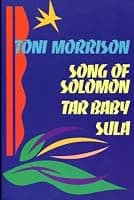
Toni Morrison was clearly ahead of her time -- look at her novels. Her interest in myth, history, a decentered narrator, racialized images of self, and aural language were well ahead of most critics and theorists, who are only now recognizing the full worth of her work. These collected interviews allow us to hear from the horse's mouth what her narrative project is. For Morrison fans, it is particularly interesting to see how the various white interviewers grapple with Morrison's insistence on writing about the culture she knows best -- black culture -- and not putting whites front and center. It is also interesting to see how Morrison herself switches positions throughout her career, from an insistence that she writes only for herself (early in her career) to writing for "the [black] tribe" (middle of her career)to writing for seemingly everybody (later career). A particular treat, for me, were references scattered throughout to how "prickly" Morrison can be and how catty she was about not being nominated for a National Book Award for SONG OF SOLOMON.
The interviews in this book illuminate the forces behind Morrison's scholarly theories about the role of race in American literature. Anyone who has read "Playing in the Dark: Whiteness and the Literary Imagination" will immediately recognize key themes in many of these interviews, although the strongest distinctions can be found in the last two interviews, each given after publication of "Playing in the Dark." Taken chronilogically, the interviews are a thrillling opportunity to observe how Morrison has evolved as a writer and a scholar. To me, it is clear her novels are a carefully crafted attempt to mirror the racialized signifying she identifies in her scholarly critiques of white writer's work.