


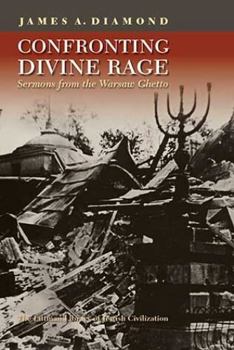
Confronting Divine Rage: Sermons from the Warsaw Ghetto

The hasidic rebbe Kalonymus Kalman Shapira delivered his weekly sermons in the most fraught of circumstances until the mass deportations from the Warsaw ghetto began in July 1942. Transcribed and edited by his own hand, they were buried, along with other cultural and religious documents collected by the Oyneg Shabbes group of volunteers, to preserve the memory of the community that had been destroyed. Far more than sabbath homilies, they bear witness to Shapira's deeply felt apprehension of divine rage and the theological upheaval he underwent in the face of unrelenting torment. Challenged by his experiences, he gathered all his strength to comfort his community while pleading with God to spare them.
This book examines Shapira's relentless questioning of God's silence in the face of suffering and how he uses his sermons as a form of resistance. It highlights how Shapira harnessed hasidic ideas to promote a new understanding of key biblical figures and rabbinic texts as he attempted to thwart God's apparent fury. The sermons reveal his intellectual audacity, creativity, and erudition, combined with his absolute refusal to abandon his commitment to Torah and his community. They emerge from the devastation of the Holocaust as an extraordinary expression of twentieth-century Jewish thought.
Customer Reviews
ThriftBooks ® and the ThriftBooks ® logo are registered trademarks of Thrift Books Global, LLC
