


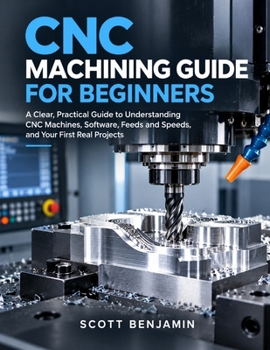
CNC Machining Guide for Beginners: A Clear, Practical Guide to Understanding CNC Machines, Software, Feeds and Speeds, and Your First Real Projects

Have you ever looked at a CNC machine and wondered how a digital design becomes a precise, finished part?
Do you want to understand CNC machines, cutting tools, workholding, coordinates, feeds and speeds, toolpaths, and G-code without getting overwhelmed by technical jargon?
Are you ready to move beyond simply watching CNC machining videos and learn a practical workflow for setting up a machine, preparing a job, making your first cuts, and troubleshooting common machining problems?
CNC MACHINING GUIDE FOR BEGINNERS is a clear, practical introduction to the world of computer numerical control machining, created for readers who want to build a solid understanding of CNC from the ground up. Instead of assuming previous machining or programming experience, this guide explains essential concepts in a logical, approachable way and connects theory to the real steps involved in preparing and running CNC jobs.
Inside, you'll learn how CNC machines work, what the major machine components do, how machine axes and coordinate systems are used, and how cutting tools, workholding methods, materials, and machining parameters affect the final result. You'll also explore the relationship between CAD, CAM, toolpaths, and machine instructions so you can understand what happens between creating a digital design and producing a physical part.
The book also introduces G-code fundamentals, feeds and speeds, tool selection, work zero, tool offsets, probing, machine setup, toolpath preparation, and job execution. Practical explanations help you understand why each step matters rather than simply telling you which buttons to press.
You'll also discover how to recognize and troubleshoot common CNC problems, including poor surface finish, incorrect dimensions, tool wear, chatter, excessive cutting forces, workholding problems, and failed or inefficient toolpaths. By understanding the causes behind these problems, you can develop a more systematic approach to improving machining results.
Whether you're exploring CNC machining as a hobby, learning for school or technical training, preparing for your first CNC project, or developing practical manufacturing skills, this guide provides a foundation you can build on.
Inside this guide, you'll discover:
CNC fundamentals and how computer-controlled machining works
The major components and types of CNC machines
Machine axes, coordinates, work offsets, and machine zero
Cutting tools, tool materials, and tool selection
Workholding techniques and setup considerations
Common CNC machining materials and their characteristics
CAD, CAM, and the complete digital-to-machined workflow
G-code fundamentals and common machine commands
Feeds, speeds, spindle speed, and feed-rate concepts
Toolpaths and how machining strategies affect results
Tool offsets, work zero, probing, and machine preparation
Ways to improve accuracy, surface finish, tool life, and repeatability
A practical workflow for planning, preparing, running, and inspecting CNC jobs
CNC machining becomes much easier to understand when you can see how all the pieces fit together. This guide is designed to help you develop that understanding step by step, giving you the knowledge and practical framework needed to approach CNC machining with greater confidence.
Start with the fundamentals, understand the workflow, and build your CNC machining skills one project at a time.
Customer Reviews
ThriftBooks ® and the ThriftBooks ® logo are registered trademarks of Thrift Books Global, LLC
