


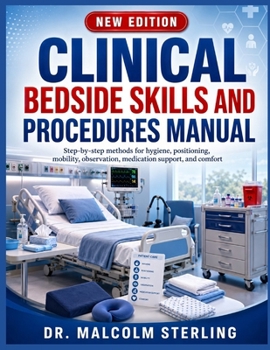
Clinical Bedside Skills and Procedures Manual: Step-by-step methods for hygiene, positioning, mobility, observation, medication support, and comfort

A practical guide for the moments when "almost right" is not safe enough
Bedside care can look simple from the outside. Wash the patient. Reposition the body. Help with food. Take vital signs. Support mobility. Assist with medicines. Record what happened. Yet every step carries risk. One missed brake, one rushed transfer, one unclear handoff, or one overlooked change in breathing can turn routine care into an avoidable emergency.
Patient-safety research has linked communication failures to roughly 7 in 10 serious events. Strong bedside skills therefore depend on repeatable steps, clear observation, safe decisions, and accurate reporting.
This manual gives students, nursing assistants, caregivers, support workers, and new clinicians a structured way to provide bedside care with greater confidence and control.
Move from uncertainty to dependable bedside practice
Learn a consistent sequence for preparing, explaining, performing, observing, reassessing, documenting, and escalating care. The result is a calmer workflow, fewer missed steps, and better support.
Inside, you will learn how to:
- Perform hygiene, oral care, grooming, dressing, toileting, and continence support with privacy and dignity
- Make beds, change linen, manage moisture, and protect skin from pressure, friction, and shear
- Position, reposition, transfer, and walk with safer body mechanics, mobility aids, and fall-prevention checks
- Support meals, hydration, texture-modified diets, swallowing precautions, and accurate intake records
- Measure and report temperature, pulse, respiration, blood pressure, oxygen saturation, pain, weight, and output
- Assist with medication-related tasks only within role, delegation, policy, and verified competence
- Recognize red flags such as chest pressure, stroke signs, choking, severe breathlessness, bleeding, confusion, falls, and reduced consciousness
- Use structured handoff, objective documentation, incident reporting, and practical competency checklists
Built for real clinical pressure
Each topic follows a clear practice pattern: review the plan, prepare the environment, confirm identity and consent, protect devices, perform the task, observe the response, restore safety, and document what matters.
Clinical pearls highlight high-value habits. Red flag alerts show when to stop. Case studies show how routine care changes when the person is weak, dizzy, confused, in pain, breathless, or attached to equipment. Review questions and skill checklists reinforce safe performance.
"I don't have time for a large manual."
You do not need to read it in one sitting. Use the chapter you need before practice, orientation, a skills check, or a difficult shift. The layout supports quick review.
"I already learned these procedures."
Knowing the steps is not the same as applying them under pressure. This manual connects technique with observation, communication, infection prevention, role limits, documentation, and escalation-the parts most often missed when care becomes busy.
The cost of waiting
Unsafe habits become harder to correct when they are repeated. Delayed learning can mean more anxiety during transfers, weaker documentation, missed deterioration, preventable skin injury, poor handoff, and greater risk to both patient and caregiver.
Build safer habits now.
Customer Reviews
ThriftBooks ® and the ThriftBooks ® logo are registered trademarks of Thrift Books Global, LLC
