


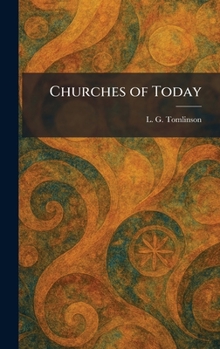
Churches of Today

"Churches of Today" is a comprehensive examination of the various Christian denominations and religious movements active during the early 20th century. Written by L. G. Tomlinson, this work serves as an informative guide to the theological foundations, historical origins, and organizational structures of the numerous groups that shaped the religious landscape of the era.
The book provides a detailed analysis of major traditions, including Catholicism, Protestantism, and various independent sects, offering readers a clear perspective on the similarities and differences that defined contemporary Christianity in the 1920s. Tomlinson explores the doctrines and practices of each group with a focus on providing clarity and understanding for both the layperson and the scholar.
As a historical snapshot of religious pluralism, "Churches of Today" remains a valuable resource for those interested in the evolution of modern Christianity and the diverse expressions of faith that continue to influence society. Its systematic approach makes it an essential reference for students of church history and comparative religion.
This work has been selected by scholars as being culturally important, and is part of the knowledge base of civilization as we know it. This work was reproduced from the original artifact, and remains as true to the original work as possible. Therefore, you may see the original copyright references, library stamps (as most of these works have been housed in our most important libraries around the world), and other notations in the work.
This work is in the public domain in the United States of America, and possibly other nations. Within the United States, you may freely copy and distribute this work, as no entity (individual or corporate) has a copyright on the body of the work.
As a reproduction of a historical artifact, this work may contain missing or blurred pages, poor pictures, errant marks, etc. Scholars believe, and we concur, that this work is important enough to be preserved, reproduced, and made generally available to the public. We appreciate your support of the preservation process, and thank you for being an important part of keeping this knowledge alive and relevant.
Customer Reviews
ThriftBooks ® and the ThriftBooks ® logo are registered trademarks of Thrift Books Global, LLC
