


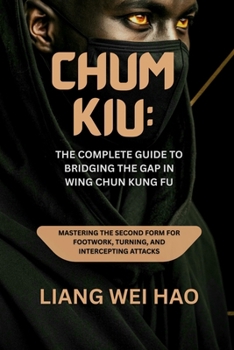
Chum Kiu: The Complete Guide to Bridging the Gap in Wing Chun Kung Fu: Mastering the Second Form for Footwork, Turning, and Intercepting Attacks

If you are ready to move beyond the basics of your training, then keep reading...
The second form in this system is often called the bridge form. For nearly all students, it presents the first real challenge of application. This is where you learn to fight. While the first form builds your structure and power from a still position, the second form gives you the tools to use that structure in motion. It changes your art from a static exercise into a living, responsive skill.
But learning the movements of the form is just the beginning. This form covers how to turn your body to deflect force, how to step forward to control distance, and how to intercept attacks before they reach full power. It introduces low, practical kicks and close-range elbow strikes. More than a series of techniques, it is a set of principles for movement, providing the essential link between having skill and being able to use it against a real opponent.
In this guide, you will discover topics such as
The philosophy of bridging the gap and moving from defense to controlThe three core principles that make the form work: body unity, simultaneous action, and interceptionA detailed look at your stance and structure as the engine for all movementA section-by-section breakdown of the form's turns, steps, kicks, and anglesHow to develop a powerful pivot and use footwork as an active part of fightingDrills to build the skill of interception and first contactPractical applications against common punches and kicksConnecting the form to partner drills and the practice of sticky handsHow this form prepares you for the wooden dummy and the final empty-hand formAnd much, much moreSo if you want to learn how to connect your training to real combat, this book will show you the way.
Customer Reviews
ThriftBooks® and the ThriftBooks® logo are registered trademarks of Thrift Books Global, LLC
